The short version
- The 2021 benzene findings were manufacturing contamination, concentrated in aerosol sprays. They triggered real recalls and say nothing about chemical filters as a class.
- The FDA's 2019 move called zinc oxide and titanium dioxide safe and effective and asked for more data on the rest. "More data, please" is not "unsafe."
- UV radiation is a proven carcinogen in the same top classification as tobacco. The claim that sunscreen causes cancer has no evidence behind it.
- Mineral if you want maximum caution or have sensitive skin. Otherwise the best sunscreen is the one you'll actually reapply. Skip the sprays if the history bothers you.
In May 2021, Valisure, a small Connecticut lab that had already made its name finding a carcinogen in heartburn pills, tested 294 batches of sunscreen and after-sun products and reported benzene in 78 of them. By mid-July, Johnson & Johnson had recalled five lines of Neutrogena and Aveeno aerosol sunscreen. Four summers later, people are still citing that episode as proof that sunscreen is poison, which is roughly the opposite of what it showed.
Benzene was a factory problem, not a formula problem
Benzene is a known human carcinogen. It is also not an ingredient in any sunscreen, has never been one, and appears on no label. What Valisure found was contamination that crept in during manufacturing, and the pattern told the story: the worst readings clustered in aerosol sprays, where the propellant supply chain is a known contamination route, and most of the 294 batches tested had no detectable benzene at all.
A contaminated batch is an argument for cleaner manufacturing and better testing, the way E. coli on romaine is an argument about farm sanitation, not against salad. The recall was the system working late, but working.
One honest note on the messenger. Valisure is an independent lab whose business is finding contamination, and finding it is what gets the lab headlines and clients. Some of its later work has drawn methodological criticism from chemists. On sunscreen, though, the findings held up well enough that J&J pulled products and the FDA took it seriously. Fair is fair.
What the FDA actually said in 2019, read slowly
Two years before the recall, the FDA proposed a rule that launched a thousand alarmed Instagram posts. In February 2019 the agency reviewed 16 sunscreen filters and sorted them into three bins: zinc oxide and titanium dioxide were declared GRASE (generally recognized as safe and effective), two obsolete ingredients (PABA and trolamine salicylate) were declared not GRASE, and the remaining 12, including oxybenzone and avobenzone, got the label "insufficient data."
Insufficient data is a homework assignment, not a verdict. The FDA said so explicitly, and it kept the filters on the market while asking manufacturers for absorption and safety studies.
The homework request had a trigger: the FDA's own researchers ran a trial, published in JAMA in 2019, showing that when people slathered on sunscreen at maximal-use levels, four chemical filters showed up in blood plasma above the threshold that triggers further toxicology testing. A 2020 follow-up extended the finding. Read those studies carefully and you find the sentence the panic skipped: absorption is not harm. The threshold is the level below which the FDA doesn't even bother asking for more studies, not a line where danger begins. Crossing it means "run the standard tests," which is what's now, slowly, happening.
Oxybenzone earned the side-eye. It's also easy to avoid
If you want to be choosy about one chemical filter, the field agrees on which. Oxybenzone absorbs into the body more readily than most filters, and high-dose animal studies have shown weak hormone-like activity. Human data at real-world exposures hasn't demonstrated harm, and the doses in those animal studies were enormous. But among the older American filters, it's the one with the most question marks next to it.
It also picked a fight with the ocean lobby. Hawaii passed the first state ban on selling oxybenzone and octinoxate sunscreens in 2018, effective January 2021, over coral reef concerns (the reef science is itself contested, but that's another article). Between the reef laws and the absorption headlines, US formulators have largely moved on. Skipping oxybenzone in 2026 barely requires effort.
The actual scandal is the filters you can't buy
Here's the part that deserves the outrage currently aimed at benzene reruns. Europe and Asia have newer UV filters, bemotrizinol and bisoctrizole among them, in wide use for more than two decades. They're photostable, they cover UVA better than the aging American lineup, and their molecules are too large to absorb through skin the way the older filters do. They answer nearly every complaint in this article.
The FDA has never cleared them. Congress passed the Sunscreen Innovation Act in 2014 specifically to unstick the approval pipeline, and the pipeline stayed stuck on data requirements. So American shelves run on a 1990s filter palette while a French pharmacy sells something better for eight euros. If you want to write your representative about sunscreen, this is the topic.
The influencers have it exactly backwards
Starting around 2024, a wave of TikTok posts began telling people that sunscreen causes cancer and that the sun is being unfairly maligned. The claim found an audience: a 2024 survey by the Orlando Health Cancer Institute found about one in seven American adults under 35 believed daily sunscreen is more harmful than direct sun exposure.
There is no good evidence that any sunscreen ingredient at consumer exposures causes cancer. Meanwhile, UV radiation's carcinogenicity is about as settled as science gets: the WHO's cancer agency classifies it in Group 1, the same top tier as tobacco and asbestos. And sunscreen has rare gold-standard evidence on its side, a randomized Australian trial that followed about 1,600 adults for years and found daily sunscreen use roughly halved melanoma incidence compared with occasional use.
One side of this argument has a randomized trial and a Group 1 carcinogen. The other has engagement metrics. The benzene episode gave the movement a borrowed credibility it never earned: a contamination recall got laundered into "sunscreen is poison," and the algorithm did the rest.
What to actually put on your face
The boring rules beat the ingredient debates. SPF 30 or higher, broad spectrum, applied in something close to the tested amount (most people use a quarter to half of it), reapplied when you're actually in the sun. A mediocre sunscreen worn daily outperforms a perfect one abandoned in a drawer by June. Shade and hats are the cheap co-stars.
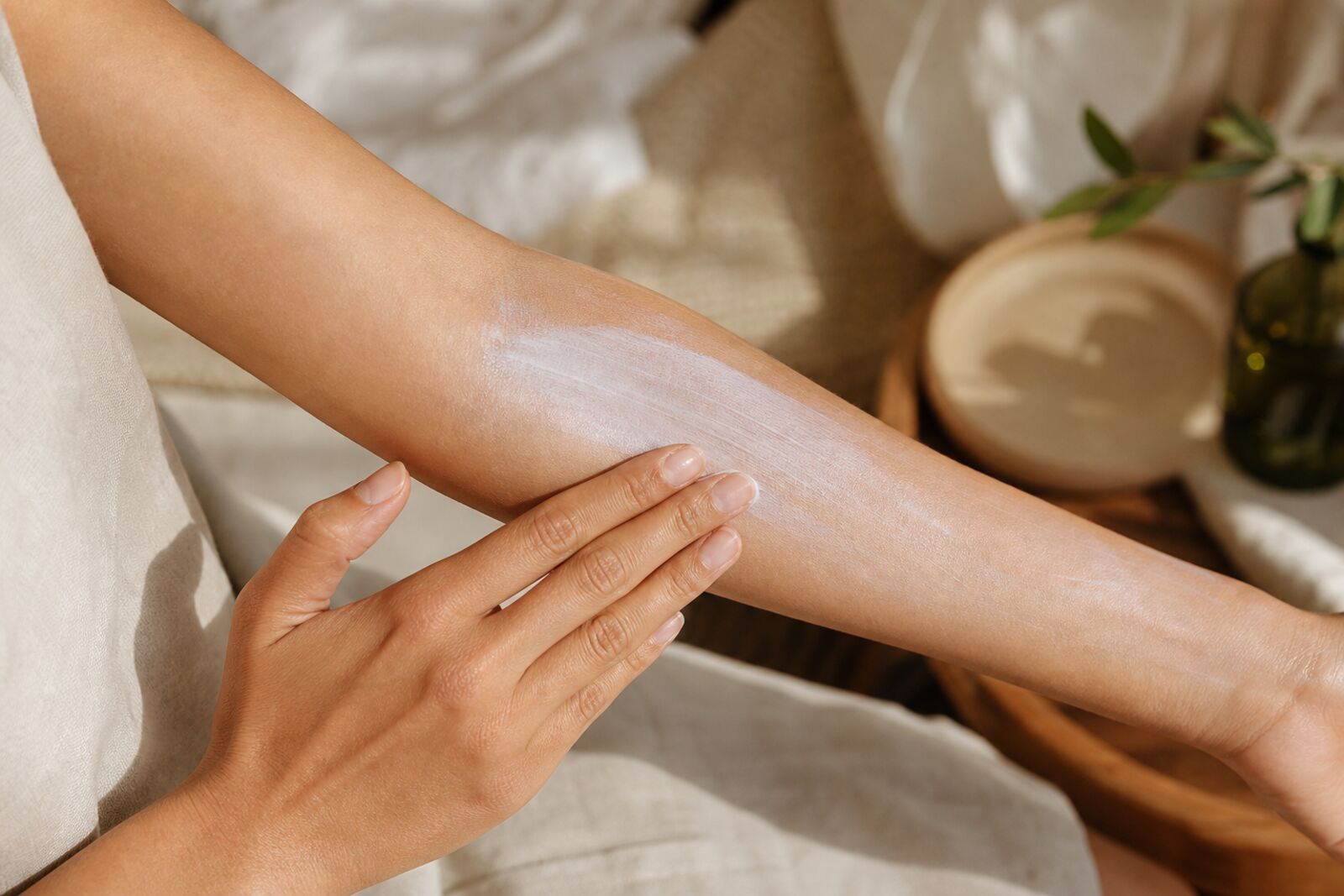
How much is "close to the tested amount"? For a face and neck, about two finger-lengths of product, squeezed out along the index and middle fingers. For a body in a swimsuit, roughly a shot glass. If those quantities sound absurd next to how you actually apply, that gap explains most "I wore SPF 50 and still burned" stories, and it's why the habit matters more than the number on the label. Two other unglamorous winners: UPF clothing, which outperforms any lotion you forget to reapply, and for babies under six months, shade and clothing instead of sunscreen, which is the FDA's own advice.
Mineral sunscreen (zinc oxide, sometimes with titanium dioxide) is the maximum-caution pick: GRASE-listed, essentially non-absorbing, gentlest on reactive skin and standard advice for small kids. The tax is cosmetic, a white cast that's most visible on deeper skin tones, though formulas keep improving. Blue Lizard's sensitive line is a dependable zinc workhorse that still shows some cast. Vanicream's SPF is built for reactive skin and feels like it, thick and matte. EltaMD UV Clear is the dermatologist-office favorite that layers beautifully under makeup and costs about $40 a tube, and note that it's a hybrid: zinc oxide plus a chemical filter.
Chemical sunscreens are lighter, clearer, and easier to rewear, which for most adults means they get worn, and that's the variable that matters. If the 2021 history bothers you, the rational response isn't abandoning sunscreen, it's skipping aerosols, which hosted most of the contamination and make it hard to tell how much actually landed on skin anyway.
Bottom line
The benzene scare was a manufacturing scandal that got mistaken for a chemistry verdict, and the anti-sunscreen movement built on it has the cancer risk exactly backwards. Any sunscreen you'll actually wear beats none, every time. Go mineral if you want maximum caution or have sensitive skin, skip the aerosols if the history bothers you, and save your outrage for the better European filters the FDA still won't approve.