The short version
- Yes, stainless leaches nickel and chromium. A 2013 Oregon State study measured it, and acidic food plus long cooking plus a brand new pan is the worst case.
- The amounts are in the same range as what you already eat in a day from oats, chocolate, and legumes. For most people that's a non-event.
- If you have systemic nickel allergy, it stops being a non-event. That's the one group we'd tell to buy 18/0 or use enameled cast iron for acidic cooking.
- New pans leach the most, and it drops off sharply. Break in a new pot on a few ordinary meals before the all-day tomato sauce.
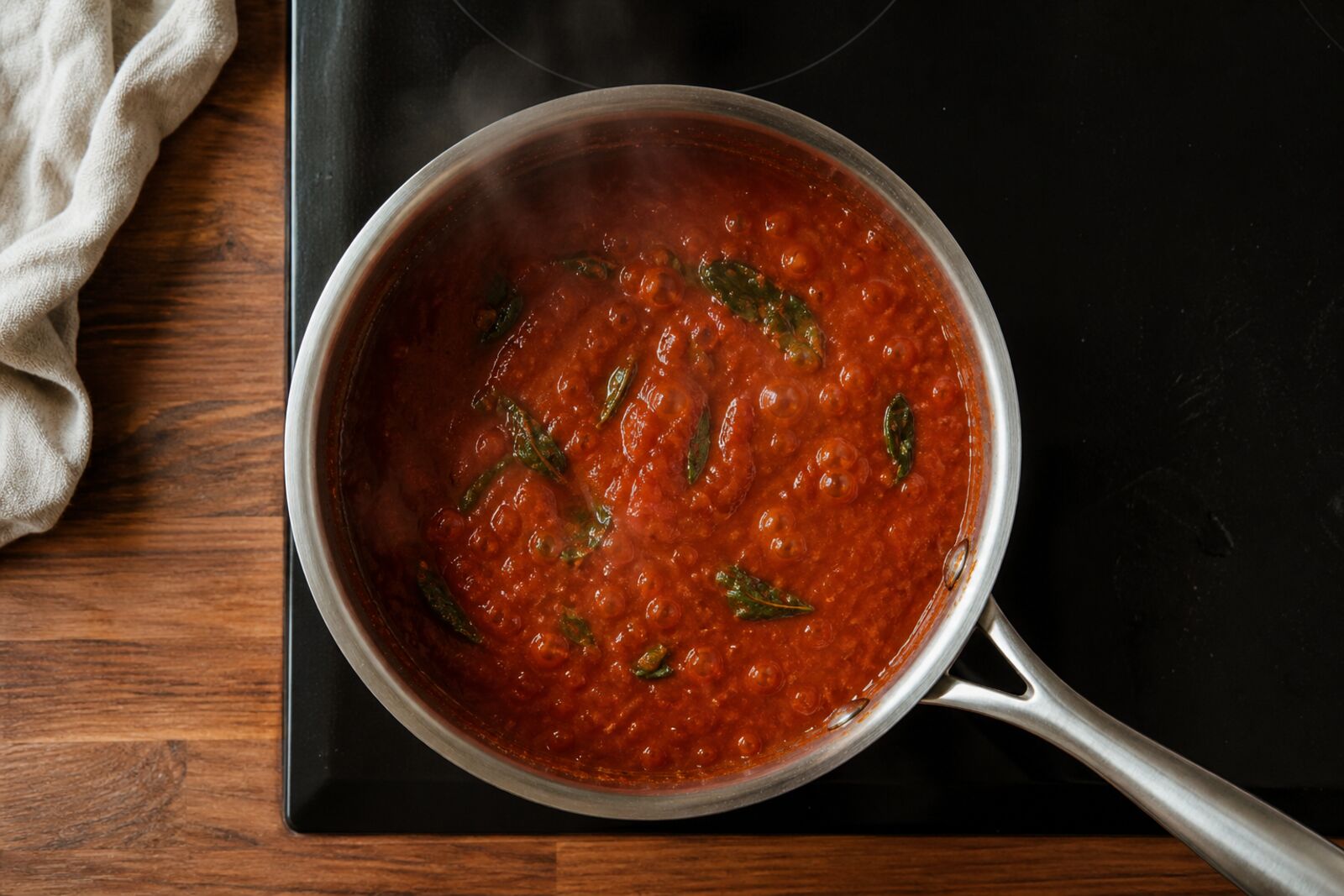
Simmer tomato sauce in a brand new stainless pot for six hours and you will finish with meaningfully more nickel in it than you started with. That's not a wellness claim. It's the result of a 2013 paper in the Journal of Agricultural and Food Chemistry by researchers at Oregon State, and it's the study that every "stainless steel is secretly toxic" post is built on, usually without the numbers.
The numbers are the interesting part, because they cut both ways.
What the Oregon State team actually measured
The researchers cooked commercial tomato sauces in several grades of stainless, with cook times ranging from 2 to 20 hours, and ran ten consecutive cooking cycles in the same pans to see how the effect changed with use.
Three findings matter. First, leaching climbs steeply with time and acidity: after six hours, nickel concentrations rose as much as 26-fold and chromium as much as 7-fold depending on the grade, and the longest cooks pushed both higher still. Second, new cookware leaches the most by a wide margin. Third, and this is the part almost never quoted, the effect fades with use. Leaching dropped with each successive cooking cycle and stabilized after about the sixth one.
By that tenth cycle, a 126 gram serving of sauce carried an average of roughly 88 micrograms of nickel and 86 of chromium. That's the number to hold onto.
What 88 micrograms is next to what you already eat
Nickel is in food. It's in oats, whole wheat, soy, nuts, cocoa, legumes, and canned goods, and nobody markets those as hazards. Estimates of typical daily dietary nickel intake run from about 100 to 300 micrograms, with some assessments of Western diets landing higher.
So a serving of very long-simmered sauce from a fairly new pan can add something in the neighborhood of a day's ordinary intake. That's not nothing, and we're not going to round it to zero. What it also isn't, for anyone without a nickel sensitivity, is a documented health problem. There's no established harm from oral nickel at these levels in the general population. The cancer classifications people occasionally cite refer to inhaled nickel compounds in refining and smelting work, not micrograms swallowed with dinner.
The chromium half of the question is even less exciting. The chromium that dissolves out of a pan is trivalent chromium, the same form sold as a nutritional supplement. Hexavalent chromium, the industrially notorious one, is not what your saucepan produces.
The people who should actually change something
Nickel is the single most common contact allergen in the world. A meta-analysis of patch-tested adults from the general population found around 11 percent sensitized, with the rate substantially higher in women than in men. Most of those people got there through jewelry and piercings, and most of them react only to skin contact.
A smaller subset has systemic nickel allergy syndrome, where swallowed nickel triggers skin and gastrointestinal symptoms. The dietary guidance for that condition typically caps intake around 150 micrograms a day, which is less than a single serving of that long-cooked sauce could contribute on its own.
If that's you, this article is the one piece of cookware advice on the site that applies to you specifically: cook acidic and long-simmered foods in something else. Enameled cast iron, glass, or 18/0 stainless. Ordinary sautés, boiling water, and quick pan sauces in standard stainless remain fine.
18/10, 18/0, 304, 316: the numbers decoded
The two-number code is just composition. 18/10 means 18 percent chromium and 10 percent nickel, which is essentially grade 304, the standard for good cookware. Chromium is what makes stainless stainless, forming the passive oxide layer that resists corrosion. Nickel makes the steel tougher, more corrosion resistant, and non-magnetic, which is why some 18/10 pans need a magnetic base layer to work on induction.
18/0 is grade 430: same chromium, effectively no nickel. It's magnetic, so it works on induction natively, and it's the choice for nickel-allergic cooks. The trade is real, though. Without nickel the steel is less corrosion resistant and more prone to staining and pitting, especially with salt. It's a downgrade in durability that you accept for a specific medical reason, not an upgrade.
Grade 316 adds molybdenum for still better corrosion resistance. It shows up in lab and marine equipment more than in home cookware, and it contains nickel, so it solves nothing for the allergic.
What to buy
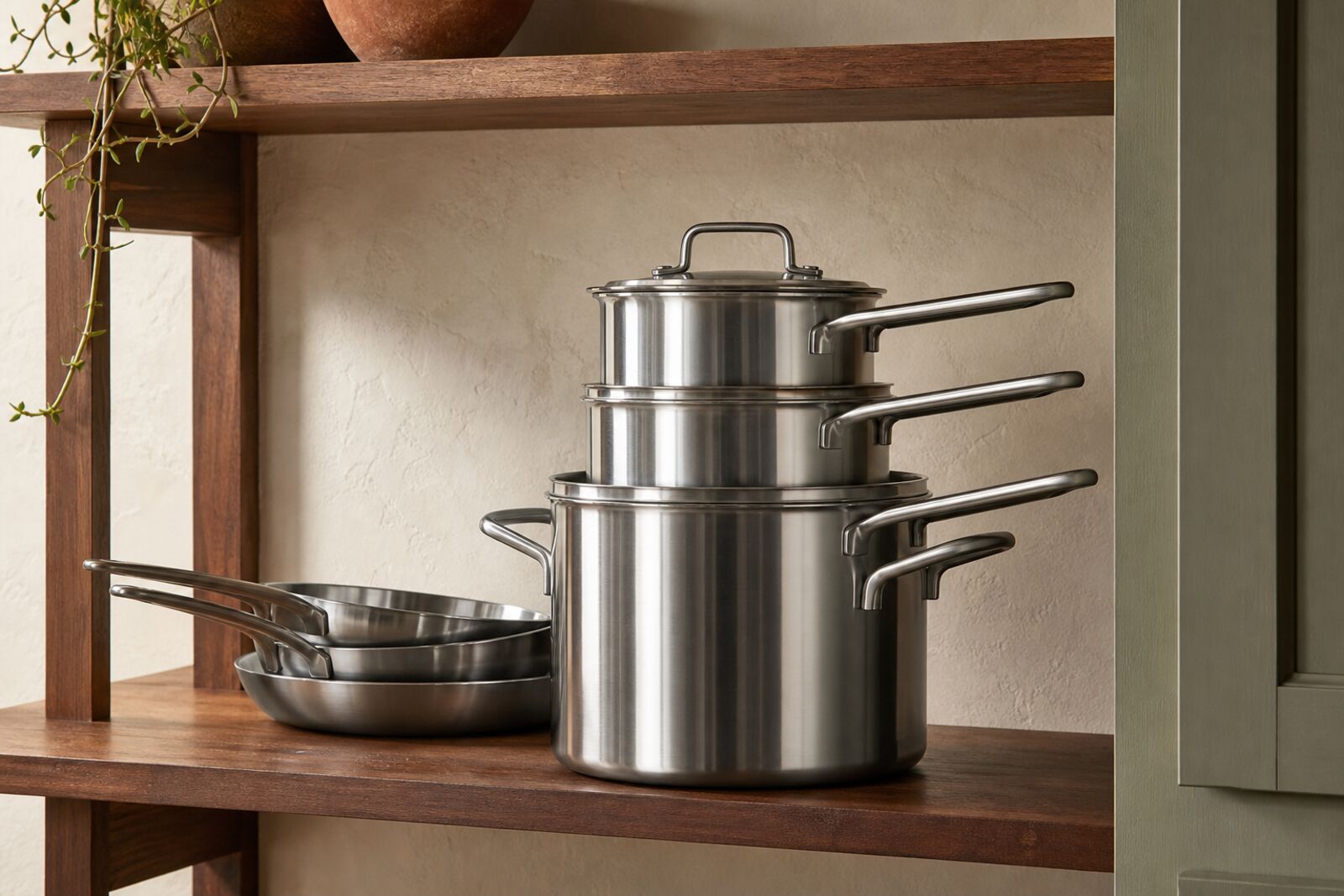
Fully clad tri-ply is the thing worth paying for, meaning an aluminum core sandwiched through the entire pan rather than a disc welded onto the bottom. Disc-bottom pans have a hot ring where the disc ends, and food scorches there.
Cuisinart's Multiclad Pro line is the value answer and has been for years. It's fully clad, it's usually a third of the price of the premium brands, and the honest flaw is that it's thinner and lighter, so it dents more easily and responds less evenly than heavier pans. All-Clad's D3 is the durability benchmark, still made in Pennsylvania, and it costs a great deal more for a difference most home cooks won't notice; its handles are also famously uncomfortable, which is a strange thing to say about a pan at that price. For nickel-free, Homichef is the main brand actually selling fully clad 18/0 in the US, and it exists because of the allergy market rather than because 18/0 performs better.
The free intervention beats all of them: use a new stainless pot for a few regular meals before you commit it to an eight-hour sauce. The steepest leaching happens in the first few uses and then settles down on its own.
Bottom line
Stainless steel is the best-understood cookware material there is, and for anyone without a nickel allergy the leaching question is settled: buy any well-made fully clad pan and stop reading about it. If you have systemic nickel allergy, take it seriously and keep acidic, long-simmered cooking out of standard stainless. Everyone else can simply break in a new pot on a few ordinary dinners first, which costs nothing.