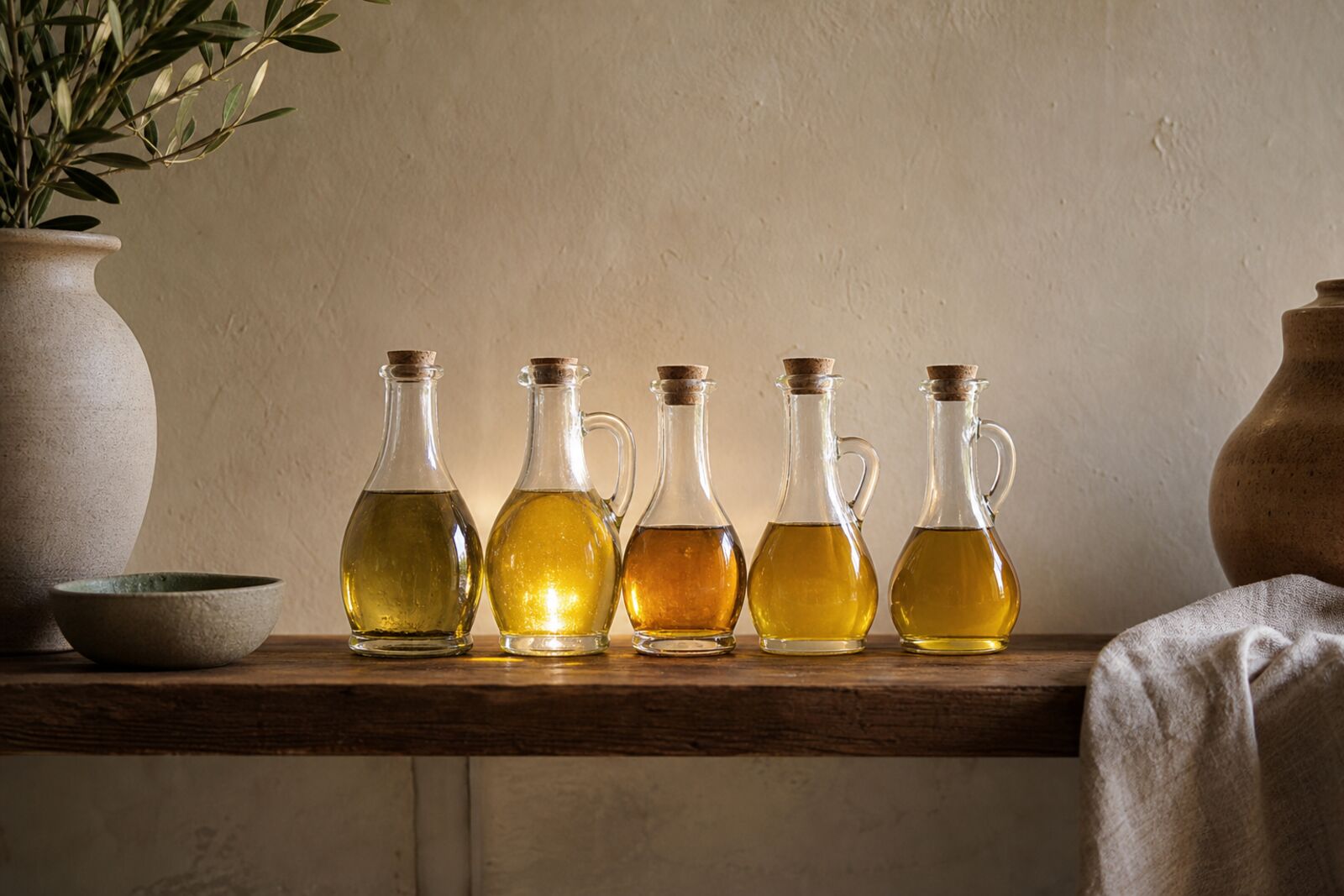
The short version
- The "hateful eight" list came from one physician's branding, not from a body of trials.
- In large cohorts and controlled feeding studies, more linoleic acid tracks with less heart disease, less diabetes, and lower inflammation markers.
- What's real underneath the panic: seed oils ride inside fried and ultra-processed food, and repeatedly reused fryer oil is genuinely degraded.
- Cook with olive oil because it has the best evidence of any fat, not because canola is dangerous.
One doctor, one phrase, eight oils
The list has an author. Cate Shanahan, a Cornell-trained physician, coined "the hateful eight" for canola, corn, cottonseed, soy, sunflower, safflower, rice bran, and grapeseed oil. It's a great phrase. Sticky, angry, easy to repeat. It moved through podcasts and wellness feeds the way great phrases do, and it kept moving until it reached cabinet level: Robert F. Kennedy Jr. has said Americans are being "unknowingly poisoned" by seed oils and has pushed restaurant fryers back toward beef tallow.
The market answered fast. Steak 'n Shake announced it was cooking its fries, tots, onion rings, and chicken tenders in 100% beef tallow. Utz said it would launch tallow-cooked kettle chips under its Boulder Canyon label. Nobody involved was waiting on a trial.
We think that's backwards, and we think the evidence is clear enough to say so plainly rather than hedge.
The blood-level studies keep pointing the wrong way for the theory
Linoleic acid is the main omega-6 fat in seed oils, and it's the molecule the panic is actually about. If it were quietly wrecking people, the cohort data would show it.
At NUTRITION 2025, the American Society for Nutrition's annual meeting, researchers presented an analysis of 1,894 adults comparing linoleic acid in blood plasma against markers of cardiometabolic risk. People with more linoleic acid in their blood had lower glucose, lower insulin, and lower HOMA-IR, the standard measure of insulin resistance. They also had lower C-reactive protein, lower glycoprotein acetyls, and lower serum amyloid A. Those last three are inflammation markers. The fat that supposedly inflames you tracked with less inflammation.
That's one analysis, it's cross-sectional, and it can't prove which way the arrow runs. What makes it worth citing is that it lands exactly where the older literature already sat. The American Heart Association's science advisory on omega-6 fats, and its 2019 follow-up in Circulation, went through the observational studies and the randomized trials and found nothing to suggest omega-6 fats promote heart disease. People eating the most omega-6 generally had the least cardiovascular disease. Patients with heart disease tended to have lower omega-6 in their blood, not higher.
The inflammation mechanism didn't survive testing
The mechanism sounds convincing, which is why it spread. Linoleic acid can be converted to arachidonic acid. Arachidonic acid feeds inflammatory signaling. Therefore seed oils inflame you.
Two problems. Conversion in humans is limited, so eating more linoleic acid barely moves arachidonic acid levels in tissue. And arachidonic acid is also the raw material for the molecules that resolve inflammation, not just the ones that start it. When researchers fed people omega-6 fats under controlled conditions and measured inflammatory markers, the markers went down or stayed flat. That is the AHA's own reading of the trial evidence, and the 2025 data didn't disturb it.
A mechanism that fails when you test it isn't a mechanism. It's a story.
What the panic gets right
Here's where we part ways with debunkers who stop at "seed oils are fine, carry on."
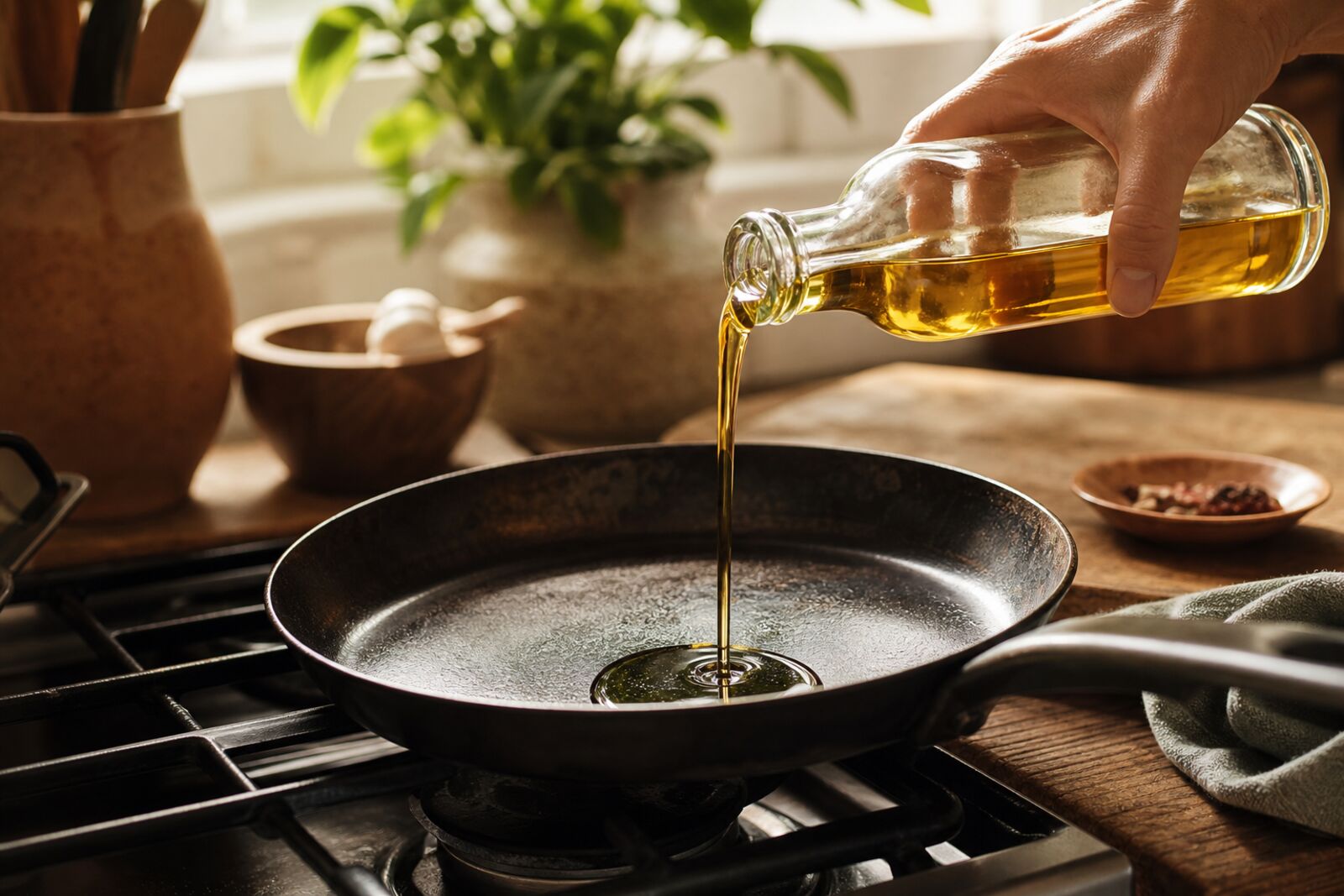
Two things inside the fear are real. First, restaurant fryer oil. Oil heated over and over degrades, and that chemistry isn't in dispute: repeated frying builds polar compounds, oxidized polymers, and reactive aldehydes, and researchers sampling oil from working fast-food outlets and restaurants have found aldehydes at meaningful concentrations. Commercial kitchens test their fryer oil with color-change strips for exactly this reason. Whether that translates into disease in someone who eats fries twice a month is unproven. But "day-old fryer oil is not the same substance as fresh oil" is simply true.
Second, the company these oils keep. Linoleic acid is in nearly every packaged food in the center aisles, so anyone comparing high-seed-oil eaters to low-seed-oil eaters in the real world is mostly comparing people who eat a lot of ultra-processed food to people who don't. That association is real. The causal arrow pointing at the oil is the part that's missing.
The solvent question deserves a straight answer too. Most of these oils are extracted with hexane, and that's not a rumor. Nearly all of it is recovered before bottling, the EU caps residue at 1 mg per kg, and measured levels in refined oils come in under that. European regulators are re-examining hexane with modern methods, which is fine and normal. If it still bothers you, expeller-pressed versions cost a couple of dollars more. Treat that as a preference, not an emergency.
Olive oil still has the best paper trail
None of this makes canola the ideal fat. Olive oil is, and it earned the spot.
PREDIMED, a Spanish randomized trial of roughly 7,400 adults at high cardiovascular risk, found about a 30% lower rate of heart attack, stroke, and cardiovascular death in the group assigned a Mediterranean diet with extra virgin olive oil, compared with a low-fat control diet. That trial was retracted in 2018 over irregularities in how some participants were randomized, then reanalyzed and republished in the New England Journal of Medicine with the same headline finding. We mention the retraction because you should hear it from us. Most olive oil marketing skips that part.
Beef tallow has no comparable trial behind it. It's a saturated fat that people started eating more of because a phrase caught on. Cardiologists quoted by ABC News and NPR in 2025 made the same point: the concern isn't tallow itself, it's people trading a well-studied fat for a less-studied one on the strength of a podcast.
What to actually put in the pan
| Fat | Best for | Honest take |
|---|---|---|
| Extra virgin olive oil | Nearly everything, including sautéing | Best evidence of any culinary fat. The smoke-point worry is overstated for normal home cooking. |
| Canola, sunflower, soybean | Roasting, baking, anything that needs a neutral flavor | Cheap, neutral, and not hurting you. Buy the store brand without guilt. |
| Avocado oil | High-heat searing | Fine, but a 2020 UC Davis analysis found 82% of tested samples were rancid or cut with cheaper oils, three of them mostly soybean. Brand matters more here than with any other oil. |
| Butter, ghee, tallow | Flavor, in the amount flavor requires | Not poison either. Just not something to start using more of on purpose. |
Who this advice actually costs
Seed oil avoidance is expensive in ways its advocates rarely price out. It pushes people toward more saturated fat, which does have trials behind it and they don't favor the tallow. It makes home cooking feel dangerous, which is the opposite of what anyone needs. And it hands a clean, memorable villain to an industry that would love you to buy a $34 bottle instead of a $7 one.
Meanwhile the actual lever sits untouched. Fried, packaged, restaurant food, several times a week, is the thing worth changing. The oil in your cabinet is not.
Bottom line
Cook with olive oil for the evidence, and keep canola, sunflower, or avocado oil around for high heat and neutral flavor without a second thought. The defensible part of the seed oil panic is about deep fryers and ultra-processed food, not about the bottle next to your stove. If you want one change that's actually supported, eat fewer restaurant fried foods, not fewer seed oils.