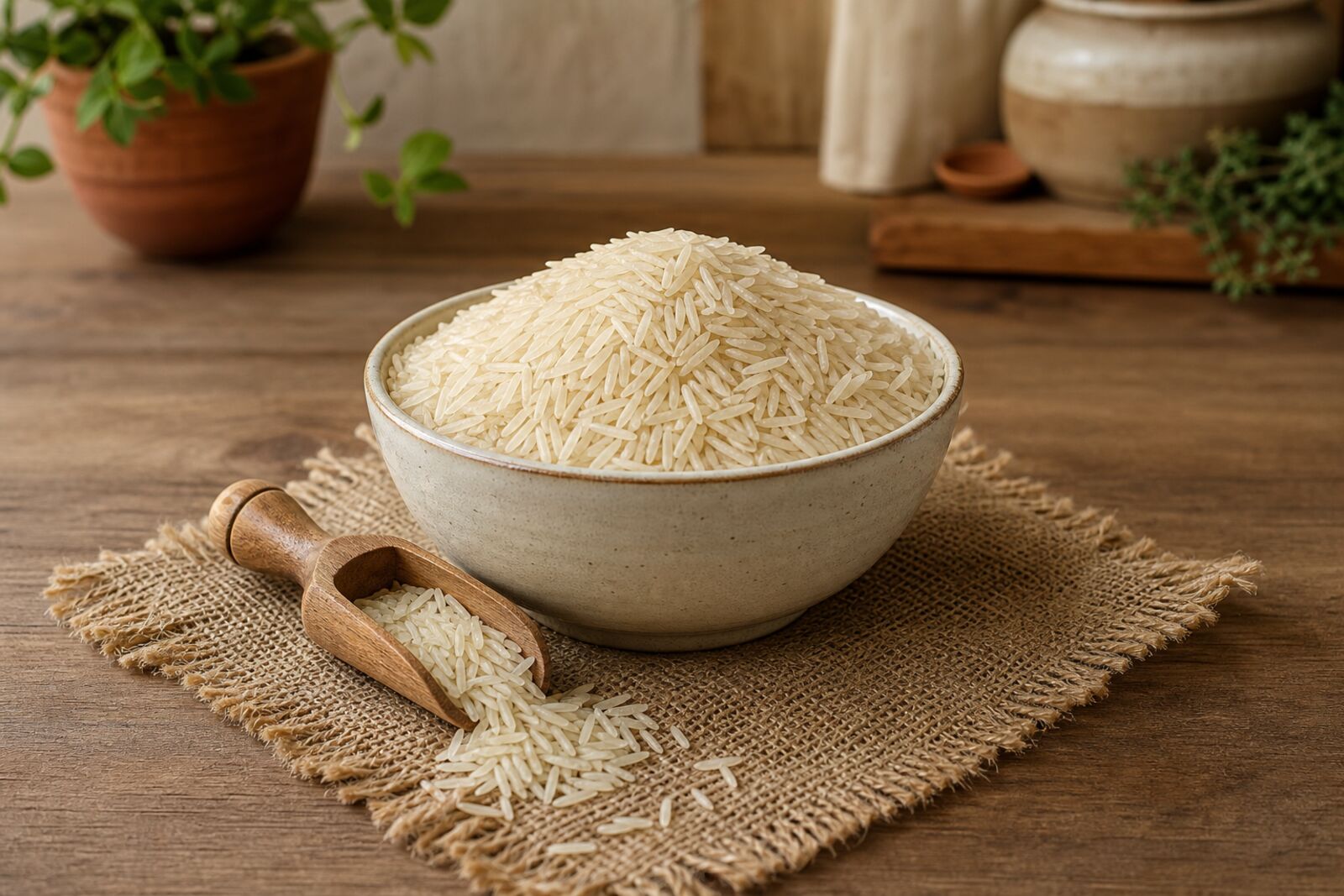
The short version
- Rice pulls up roughly ten times more arsenic than other grains, because it's the one major crop grown in flooded fields. This is a farming physics problem, not a brand problem.
- Cook it like pasta. Boiling rice in a big pot of extra water and draining it removes a large share of the inorganic arsenic, and it's free.
- White basmati and California-grown rice test lower. Brown rice tests higher than white, because the arsenic concentrates in the bran.
- Adults eating rice a few times a week can relax. Infants fed rice cereal daily are the group the science is actually worried about.
In May 2025, the nonprofit Healthy Babies Bright Futures published results from 145 rice samples pulled off US grocery shelves, spanning more than 100 brands. Arsenic showed up in every single one. More than a quarter came in above 100 parts per billion, the level the FDA set as its action limit for infant rice cereal. Cadmium turned up in all but one sample.
That's a genuinely bad set of numbers, and this is one of the rare cases where the concern holds up and the fix costs nothing. You just have to boil the rice differently.
Why rice and not wheat, oats, or barley
Arsenic is in soil and groundwater everywhere, some of it natural, some of it left behind by decades of arsenical pesticides. Most crops barely take it up. Rice does, and the reason is how it's grown.
Rice is the only major cereal grown standing in water. Flooded soil chemistry makes arsenic far more available to roots, and the plant moves it into the grain. Pediatricians summarizing this for parents put the figure at about ten times more arsenic than other grains, and research comparing flooded to aerobic growing conditions has found dramatically lower grain arsenic when the field isn't kept underwater.
Which means no brand is going to solve this with better sourcing alone, and no amount of organic certification changes it. Organic rice takes up arsenic exactly like conventional rice does. Soil and water don't read labels.
The cooking method that does most of the work
Most people cook rice by absorption: measured water, lid on, everything the grain releases stays in the pot. That's the worst version for arsenic, because inorganic arsenic is water soluble and you're serving it back.
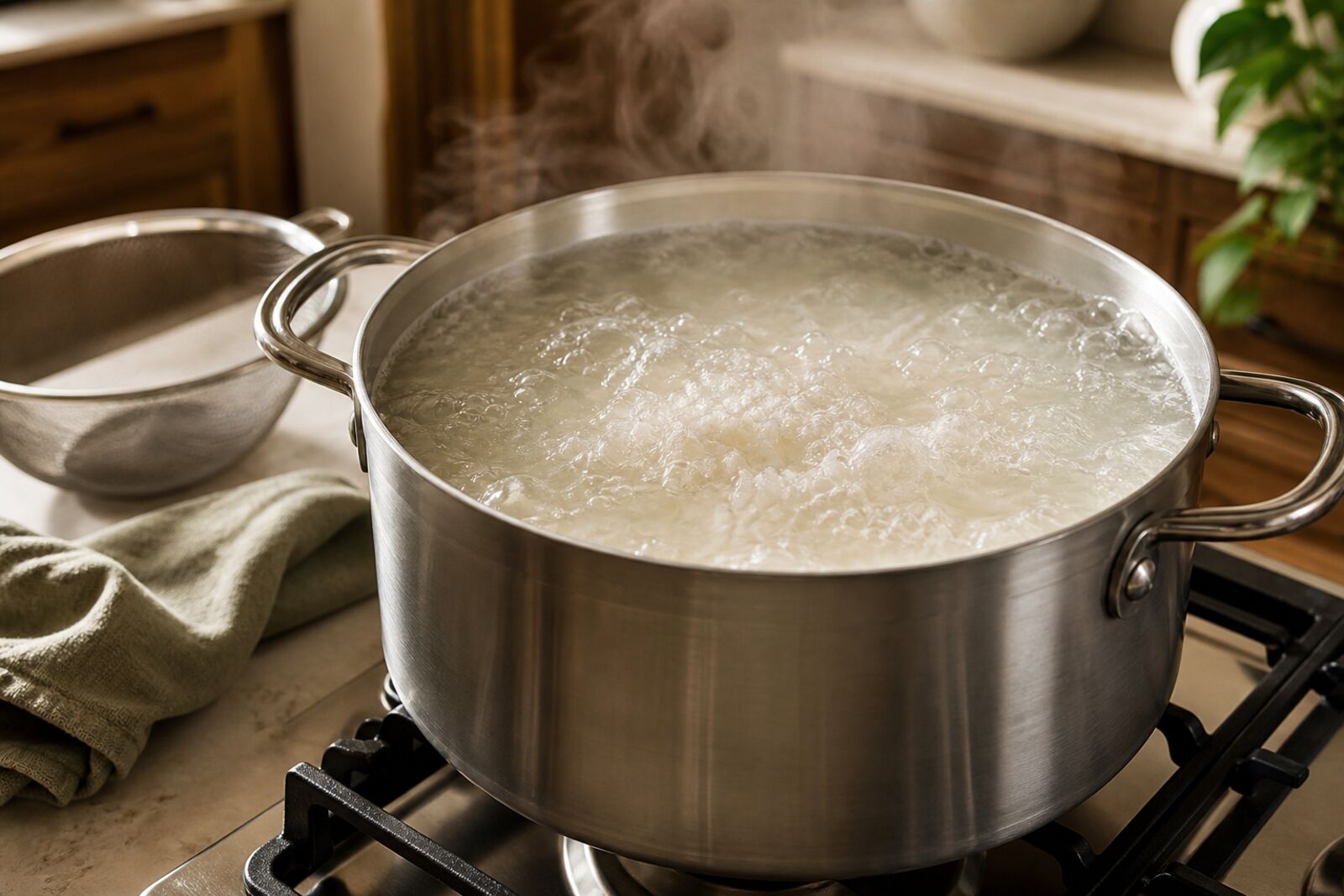
Cook it like pasta instead. Use a big pot of water, six to ten parts water to one part rice, boil until done, then drain. Published research has measured that excess-water cooking cuts inorganic arsenic by roughly 40% in polished long grain rice, about 50% in brown rice, and around 60% in parboiled rice.
There's a real cost, and we're not going to skip it: draining also washes out a chunk of the added nutrients in enriched white rice. Studies have measured iron, folate, niacin, and thiamin dropping by half or more in enriched varieties. Brown rice isn't enriched, so it loses much less.
Researchers at the University of Sheffield published a workaround in 2020 that gets both. Boil water first, add rice, cook for five minutes, drain that water off, then add fresh hot water and finish cooking by absorption on lower heat. They measured 73% of inorganic arsenic removed from white rice and 54% from brown, without the nutrient losses of full pasta-style cooking. It takes one extra pour.
Rinsing rice before cooking helps a little. It's worth doing, and it is not a substitute for the water swap.
Which rice you buy matters more than which brand
Two patterns show up consistently in testing, and both are useful at the store.
The first is brown versus white. Arsenic concentrates in the bran layer, which is exactly the part that makes brown rice brown. Strip it and you strip a meaningful share of the arsenic with it. This is the one nutrition trade-off in the whole piece that's genuinely annoying: brown rice has more fiber and more minerals and more arsenic.
The second is geography. Consumer Reports' testing has consistently found basmati and sushi rice among the lowest types, both averaging under 60 parts per billion of inorganic arsenic, while long and short grain and parboiled rices averaged around 100. Origin drives that. Research comparing US growing regions found rice from the south central states (Arkansas, Louisiana, Missouri, Texas) averaged roughly 1.76 times the arsenic of California rice, a legacy of the arsenical pesticides poured on cotton fields in that region for decades before rice took over the acreage.
So the shopping rule is short: white basmati from India or Pakistan, Thai jasmine, or California-grown. Skip the rice with no origin on the bag.
Lundberg Family Farms, the California grower, is the rare brand that publishes anything here. It says it tests its crop annually through a third-party lab and reports a ten-year average around 90 parts per billion of inorganic arsenic. Two honest caveats: that's the company reporting its own testing rather than an independent audit, and its rice costs more than a store-brand bag. Publishing numbers at all is more than nearly anyone else in the category does.
Babies are the group this is actually about
Everything above is optimization for adults. For infants it's a different conversation, and this is where we stop hedging.
Infants eat far more per pound of body weight than adults, their brains are developing, and for a couple of generations the default first solid food in America was rice cereal, often every single day. The FDA finalized a 100 ppb action level for inorganic arsenic in infant rice cereal for exactly this reason, and the 2025 testing found plenty of regular rice on shelves above that number.
The fix is variety, and it's endorsed by the American Academy of Pediatrics and the FDA both: iron-fortified oat, barley, and multigrain cereals work fine as first foods. When Healthy Babies Bright Futures tested infant cereals, the non-rice options averaged dramatically less arsenic than the rice-only ones. Quinoa, oats, and barley all test far lower as a family of grains.
Also worth knowing: rice syrup, rice puffs, and rice-based toddler snacks are made of the same grain, and they add up faster than a bowl of rice at dinner does. And if you use tap water from a private well, get it tested for arsenic, because cooking rice in arsenic-heavy water undoes everything else.
What this looks like in a normal kitchen
If you eat rice a few times a week, switch to basmati or California-grown, cook it in extra water, and stop thinking about it. That combination is estimated to cut arsenic exposure substantially, and it costs you a colander.
If rice is a daily staple in your household, which it is for millions of families, the same steps matter more, and adding other grains to the rotation is the highest-value change. Not because rice is dangerous at dinner, but because the exposure is cumulative and variety is the cheapest hedge there is.
Bottom line
Adults: buy white basmati or California-grown rice, cook it in six to ten parts water and drain it, and consider the matter closed. Parents: this one is real, so vary infant grains with oat and barley cereals, keep rice-based toddler snacks occasional, and don't make rice cereal the everyday default.