The short version
- Plastic sitting in a cool cabinet holding dry rice is boring. Heat, fat, scratches, and age are what move chemicals and particles into food.
- "BPA-free" usually means a cousin chemical (BPS or BPF) that behaves a lot like BPA in lab studies. It's marketing, not a safety certificate.
- The biggest single win is free: stop microwaving plastic. Put the food on a plate first.
- Freezer and dry-goods plastic is low priority. Keep it and spend nothing.
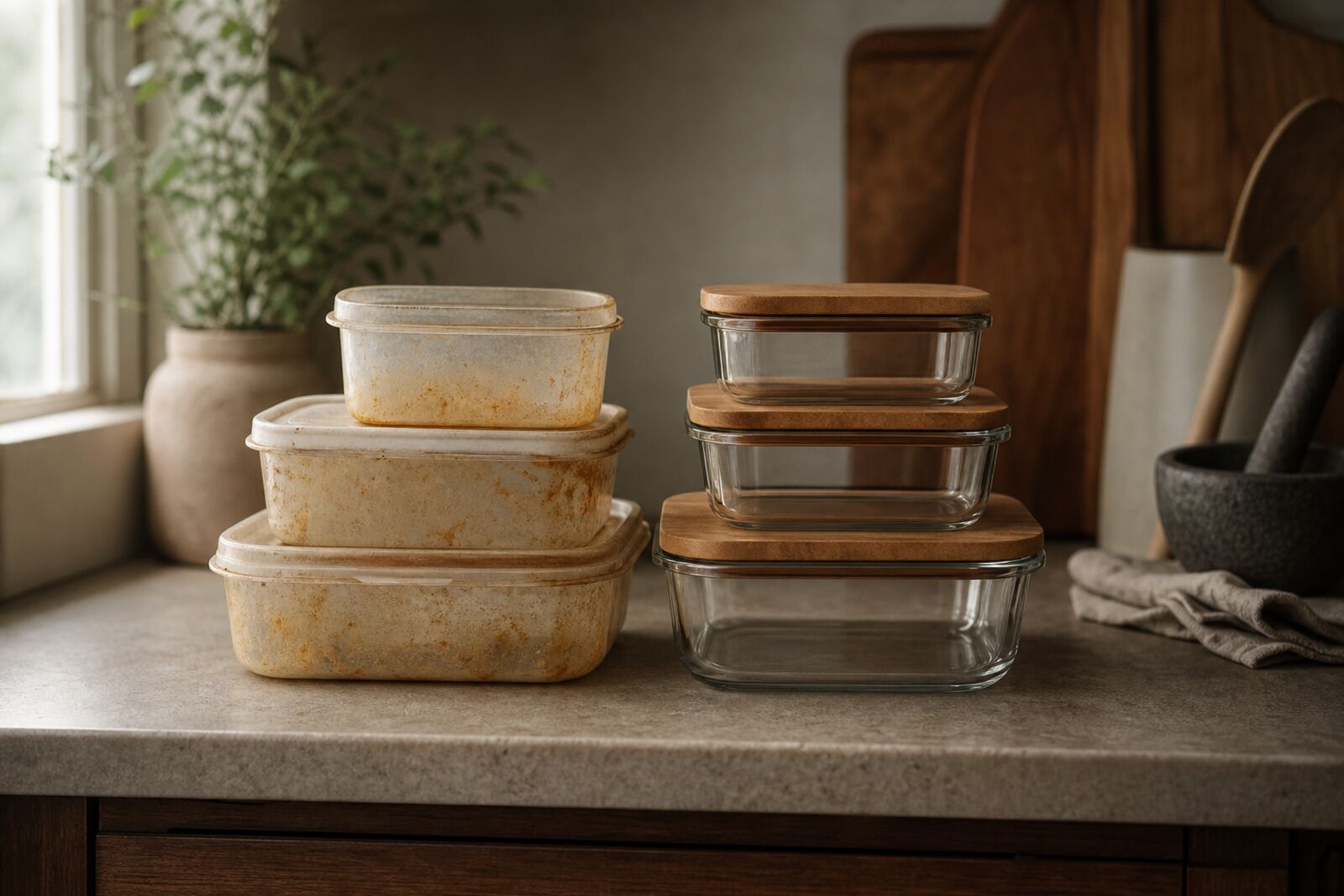
Somewhere in your kitchen is a cabinet of veterans: cloudy lids, a bottom stained orange by a 2019 marinara, takeout tubs on their fortieth tour of duty. Here's the honest read. Most of that plastic was never dangerous sitting on the shelf. But the way a lot of us actually use it, hot leftovers straight from the pan, oily sauces, two minutes on high in the microwave, is exactly the pattern that turns fine plastic into questionable plastic.
So this isn't a purge-everything piece. It's a triage.
Heat, fat, scratches, time: the four-part aging test
A plastic container isn't one substance. It's a polymer plus a cocktail of additives, plasticizers, stabilizers, colorants, and those additives aren't chemically locked in place. Small amounts migrating into food is normal, expected, and regulated. The real question is how much, and four things reliably push the number up.
Heat speeds migration, full stop. Fat acts like a solvent for many of these compounds, so oily curry pulls more out of a container than dry cereal ever will. Scratches multiply the surface area in contact with food and shed physical particles. And time degrades the polymer itself: old plastic gets brittle, cloudy, and sheds more of everything.
Run the test on your own cabinet. A newish container holding crackers scores zero out of four. A scratched, decade-old tub you use to reheat chicken tikka masala scores four out of four. Same material, completely different situation.
Two sneaky entries on the heat list. The dishwasher counts: a heated dry cycle bakes plastic over and over, which is why old containers go cloudy and brittle even if they never see a microwave. Top rack helps, air dry helps more. And reused takeout containers deserve a special mention, because thin single-use plastic was engineered to survive exactly one trip. A sturdy polypropylene deli tub is fine for cold leftovers; a flimsy clamshell on its tenth reheat is the worst offender in the drawer.
"BPA-free" fixed less than the label implies
BPA became a household villain in the late 2000s, and the FDA ended its use in baby bottles and sippy cups in 2012. Manufacturers responded, mostly by moving sideways to bisphenol S and bisphenol F, close chemical cousins. Researchers have a name for this move: regrettable substitution.
A study in Environmental Health Perspectives found that most plastic products tested, including BPA-free ones, leached chemicals with detectable estrogenic activity. A 2022 study in PNAS found BPS and BPF drove concerning changes in lab-grown human mammary tissue. None of this proves your BPA-free container is hurting you; hormone activity in a lab model is a long way from demonstrated harm at kitchen doses. What it does mean is that "BPA-free" tells you which chemical isn't in the plastic, not that the replacement is safe. The heat-fat-scratch rules apply exactly as before.
The microwave is the big lever
In 2023, researchers at the University of Nebraska-Lincoln published a study in Environmental Science & Technology that microwaved plastic baby food containers and counted what came off. In some cases, three minutes of microwaving released millions of microplastic particles and billions of nanoplastic particles from a single square centimeter of plastic, far more than months of refrigerator or room-temperature storage.
Two honest caveats. First, a particle count is not a measured human harm; scientists are still working out what these particles do in a body, and "detectable" is not "dangerous." Second, the same team's follow-up finding, that concentrated doses of these particles killed most of the cultured kidney cells they were dropped on, is a petri-dish result, not a health outcome. What the study nails down is direction: of everything you do with a plastic container, microwaving it is the moment it sheds the most into your food.
While we're here: "microwave safe" on the bottom of a container is a claim about the container. It means the plastic won't melt, warp, or fail in the microwave. It is not a claim that nothing migrates into your food while it's in there.
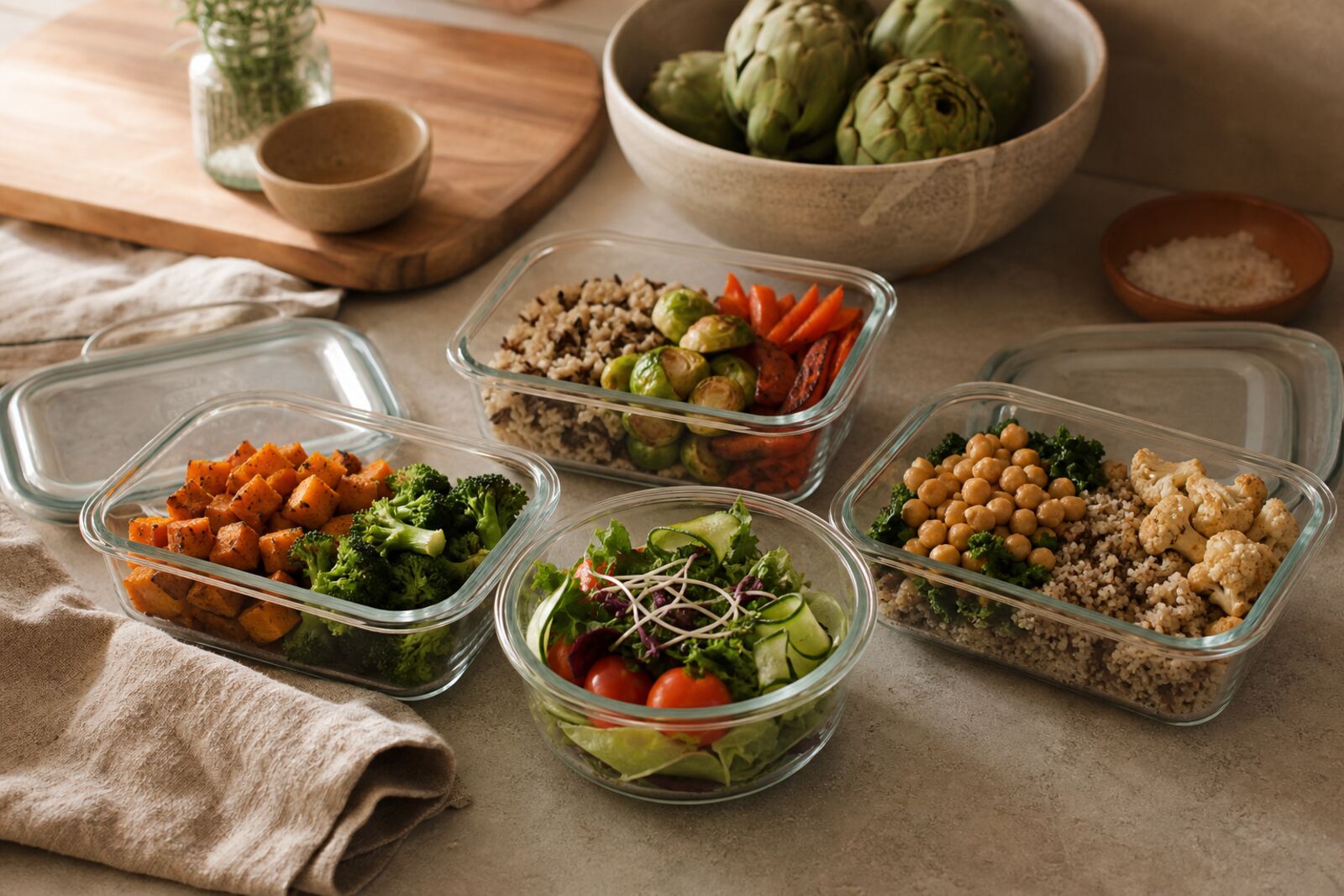
The fix is the cheapest one in this entire category. Slide the leftovers onto a plate or into a glass bowl before you hit start. Free, done, biggest lever pulled.
The swap order: spend money where the heat is
If you're replacing plastic with glass or stainless steel, do it in this order.
First: anything that goes in the microwave. Glass container sets from Pyrex or Anchor Hocking are inexpensive, last decades, and shrug off tomato stains. One caveat for both: the lids are still plastic, so leave the lid off or ajar on the counter when you reheat.
Second: whatever catches hot, oily leftovers. Pouring hot bolognese into plastic combines the two biggest migration drivers at once. Either let food cool before it hits plastic, or make these your next glass upgrades.
Third: the veterans. Scratched, cloudy, stained, or brittle plastic has told you it's degrading. Retire it from food service. It can live a long second life holding screws and sponges.
Last, or never: freezer and dry-goods plastic. Cold slows chemical migration to a crawl, and dry foods like flour, pasta, and cereal have little fat or moisture to extract anything. The plastic bin of pantry staples and the freezer stash are the lowest-stakes plastic in your house. Keeping them is the reasonable call, not the lazy one.
Notice what's not on the list: a $150 haul of matching "non-toxic" containers bought in one anxious evening. The upgrade that matters most costs nothing and happens at the microwave door.
Bottom line
Don't purge, triage. Stop microwaving plastic today for free, move hot and oily leftovers into glass over the next month, and retire anything scratched or cloudy as you notice it. The freezer and pantry plastic can stay for years, guilt free.