The short version
- The Dirty Dozen ranks how contaminated produce looks in lab data. It does not tell you whether the amount you eat poses a risk, and those are different questions.
- USDA testing finds over 99% of samples come in under EPA limits, and a 2024 peer-reviewed risk assessment put real-world exposures far below health-based guidance values.
- The strongest case for organic is farmworkers and soil, not your bloodstream. It's also the case almost nobody makes out loud.
- A conventional apple beats no apple, every single time. Eat the produce.
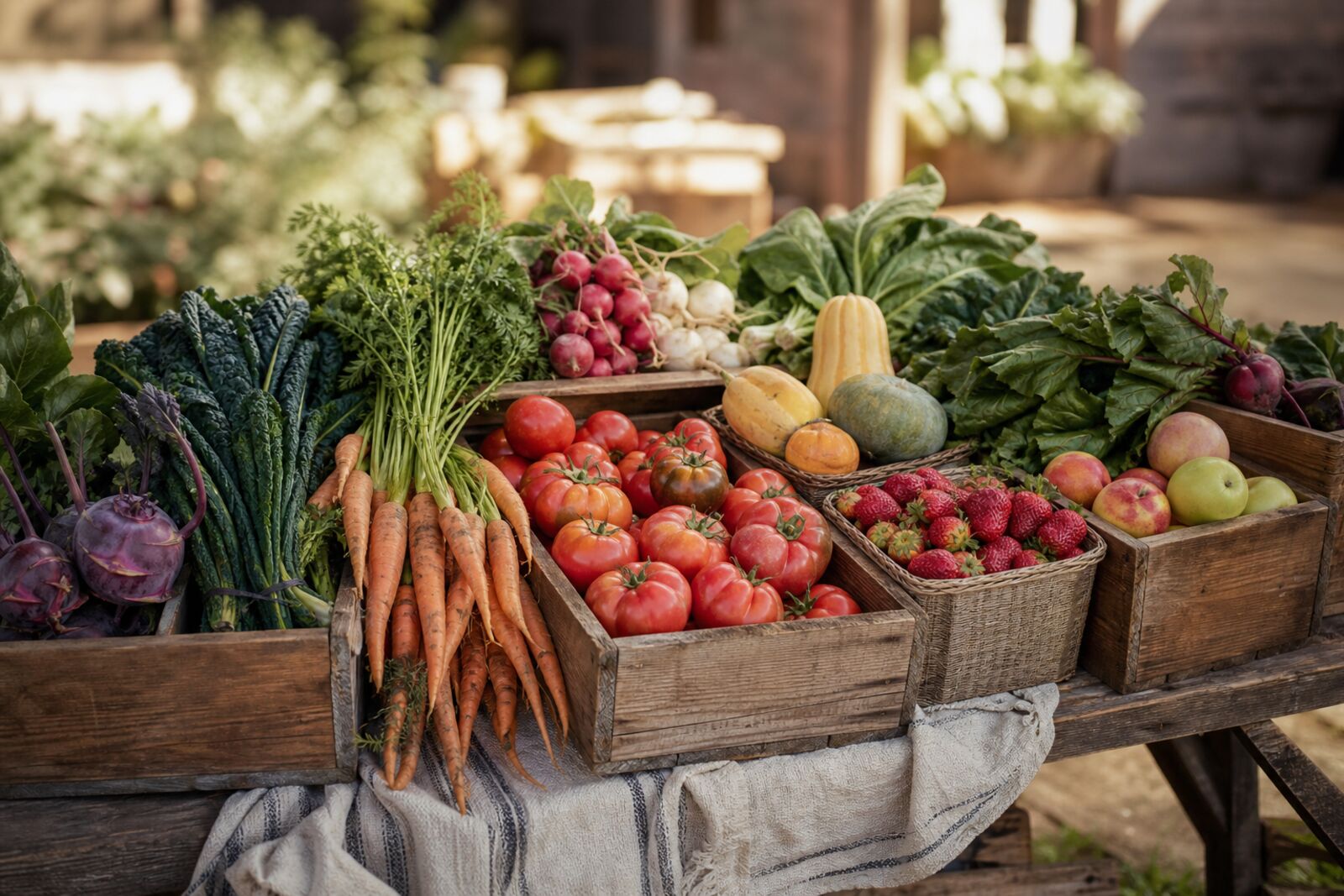
Every spring, one press release rearranges the produce aisle inside millions of American heads. The Environmental Working Group publishes its Dirty Dozen, strawberries top the list again, and a lot of shoppers walk past the $3.99 clamshell toward the $6.99 one. Some of them walk past both and buy chips.
That list is not what most people think it is. And organic produce is not what most of its critics think it is either. Here's the honest version of both.
The Dirty Dozen ranks contamination, not risk
EWG builds the list from the government's own numbers: the USDA Pesticide Data Program, which tests thousands of produce samples a year. For most of the list's history, the ranking was driven by how often residues turned up and how many different ones appeared on a single sample. A strawberry carrying eight barely detectable residues could rank worse than a fruit carrying one residue of something considerably nastier.
EWG revised the methodology in 2025 to include a toxicity component, using EPA no-adverse-effect levels the group obtained through a Freedom of Information Act request, and published the method in the International Journal of Hygiene and Environmental Health that September. Credit where it's due: that's a real improvement, and EWG deserves it.
What the ranking still doesn't do is answer the question a shopper is actually asking, which is not "what's on this?" but "does the amount on this hurt me?" Toxicologists have been making that distinction for years, and the 2024 review that ran the numbers put it plainly: risk depends on a chemical's potency and on the magnitude, frequency, and duration of exposure, not on whether an instrument can find it.
The numbers the fear framing leaves out
The USDA's annual pesticide summaries have said the same thing for over a decade: more than 99% of sampled foods have residues below the tolerances EPA sets, and in the 2022 data, 27.6% of samples had no detectable residue at all. The most recent summary, covering 2024 samples, landed in January 2026 with the same headline number.
Tolerances are enforcement limits, not health cliffs, so that stat alone isn't the whole story. The better study is a 2024 screening-level risk assessment by Jacobs and colleagues in Critical Reviews in Toxicology, which took EWG's own Dirty Dozen and estimated actual consumer exposures against EPA health-based guidance values. Every pesticide and produce combination came in below the guidance value, most of them far below. To get near the line, the researchers noted, a person (a child included) would have to eat quantities of a single fruit that dwarf anything real people eat.
That is the part the annual news cycle never carries. Residues on conventional produce are real, measurable, and, at the amounts humans eat, extremely small.
Scaring people out of the produce aisle has a cost
There's a downstream effect worth taking seriously. In a 2016 study in Nutrition Today, researchers at the Illinois Institute of Technology's Center for Nutrition Research found that Dirty Dozen style messaging made low-income shoppers report they'd be less likely to buy fruits and vegetables at all, organic or conventional. It measured stated intent rather than checkout receipts, so hold it loosely, but the direction is intuitive and it points somewhere bad.
Because the actual American produce problem isn't pesticides. It's that the CDC keeps finding only around one in ten adults eats enough vegetables. The gap between "eats produce" and "eats no produce" is a documented, enormous health difference. The gap between organic and conventional produce is, on the evidence below, small.
Organic farms use pesticides. Just different ones.
Certified organic is not a pesticide-free system, and anyone selling it that way is selling you something. The National Organic Program maintains a National List of allowed substances that includes roughly two dozen synthetic materials plus a long roster of natural ones. Copper sulfate is allowed for plant disease control, with limits on how much can build up in soil. Spinosad, derived from a soil bacterium, is allowed for insects.
Copper in particular is worth knowing about, because it doesn't break down. It accumulates in soil and it's toxic to aquatic life, which is precisely the kind of thing conventional agriculture gets criticized for. "Natural" isn't a toxicology category. Dose still makes the poison, in both directions.
What organic does reliably deliver is fewer and lower synthetic pesticide residues on the food. Feeding studies that switch families to organic diets show urinary pesticide metabolites drop within days. That's a genuine, measurable difference. Whether it translates into a health outcome for the eater is the part nobody has demonstrated.
The best argument for organic is one almost nobody makes
Forget your bloodstream for a second and think about the person holding the sprayer.
Over a billion pounds of pesticides are applied to US crops each year, and the exposure gradient between a farmworker in a treated field and a shopper eating a washed apple is not close. It's orders of magnitude. Organic certification bans synthetic pesticides outright, so certified organic acreage means measurably lower occupational exposure for the people working it, plus the soil and water effects that come with it.
That's the version of the organic argument with real dose behind it. It's an ethical and environmental purchase more than a personal-safety one. It's also, oddly, the argument the organic marketing machine mostly skips, because "protects farmworkers" sells fewer $6.99 clamshells than "protects your family."
Nutritionally, it's close to a wash
The Stanford meta-analysis published in the Annals of Internal Medicine in 2012, led by Crystal Smith-Spangler and Dena Bravata, pooled the available studies and found no strong evidence that organic food is more nutritious. Only phosphorus came out meaningfully higher, and essentially nobody in America is short on phosphorus. The same analysis did confirm organic reduces pesticide residue exposure.
The counterpoint, and it's a fair one: a 2014 meta-analysis in the British Journal of Nutrition led by Barański found higher antioxidant concentrations and lower cadmium in organic crops. Real finding, contested methods, and a higher polyphenol number in a lab is a long way from a health outcome in a person.
How to spend the money
Use the price gap, not the list. If organic costs a dollar more, buy it and enjoy the smaller residue load, the farmworker benefit, and the soil practices. If it costs double, buy conventional and buy more of it. Volume of vegetables in your kitchen beats certification on a fraction of them.
If you eat something daily and in quantity, that's where organic dollars do the most work. Apples for a kid who eats two a day, the greens in your salad every night, the berries that go in the blender each morning.
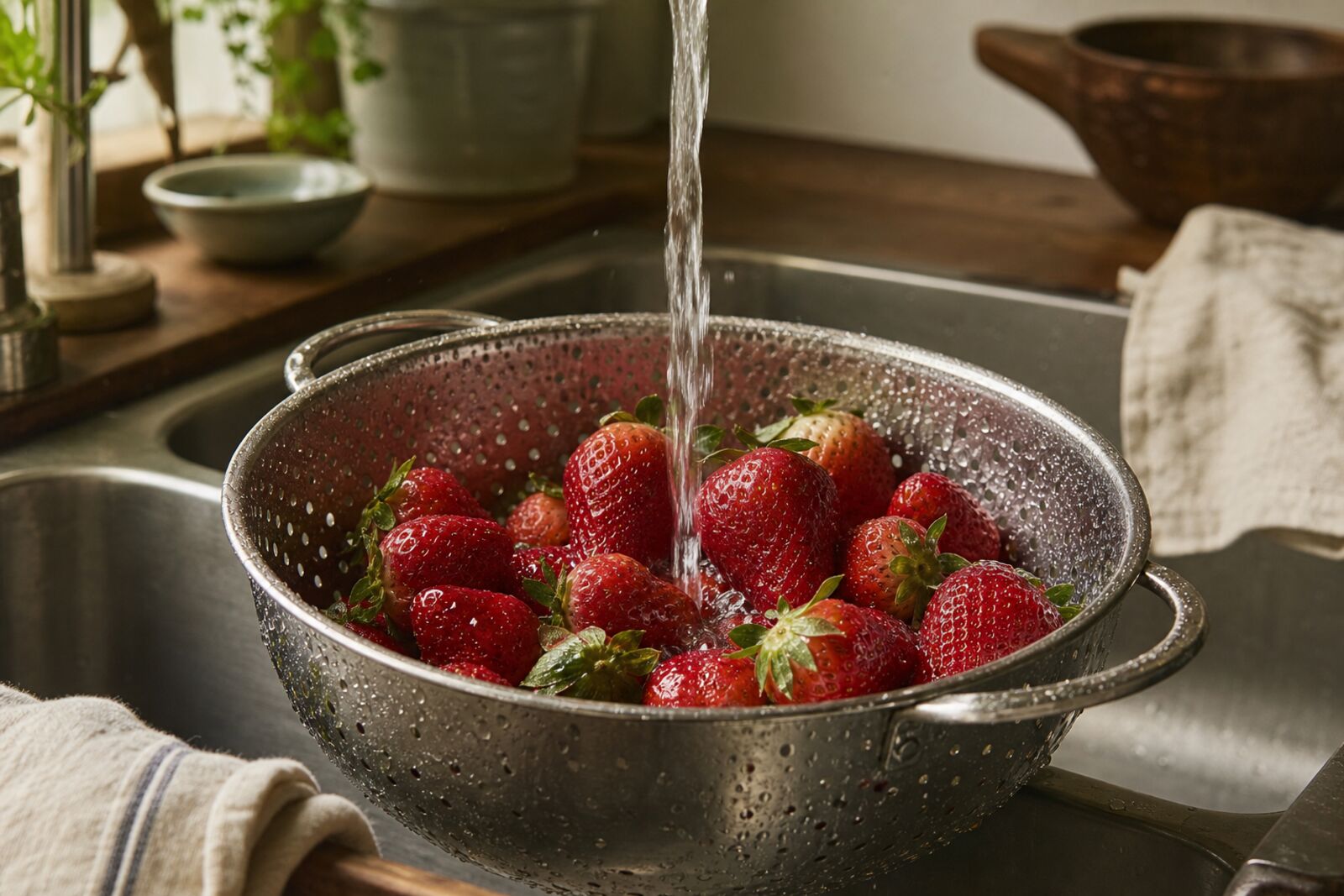
And wash everything, organic included. The FDA's advice is running water and a bit of rubbing for 15 to 20 seconds, no soap, no detergent, no commercial produce wash. Produce is porous and soap residue is its own problem, and the sprays haven't beaten plain water in testing. Rinsing removes dirt, a meaningful share of surface residues, and the microbes that are a far more likely cause of a bad week than any pesticide.
Bottom line
Eat more produce, full stop, and never let a list talk you out of a conventional apple. Buy organic when the price gap is small, when it's something you eat daily, or because you want to back farmworkers and soil, which is the strongest argument in the whole category. Buying it out of fear of conventional strawberries is paying a premium for a risk the data doesn't support.