The short version
- Nothing you own combines more skin contact, warmth and moisture than underwear. If organic cotton is worth buying anywhere, it's here.
- Look for GOTS certification, not "made with organic cotton" on the front, which can lawfully mean 70 percent.
- Accept the 95/5 cotton-elastane blend. Pure cotton exists but bags out; five percent stretch is the honest optimum.
- Undyed or light colors keep the dye chemistry simple. OEKO-TEX Standard 100 covers the finished product.
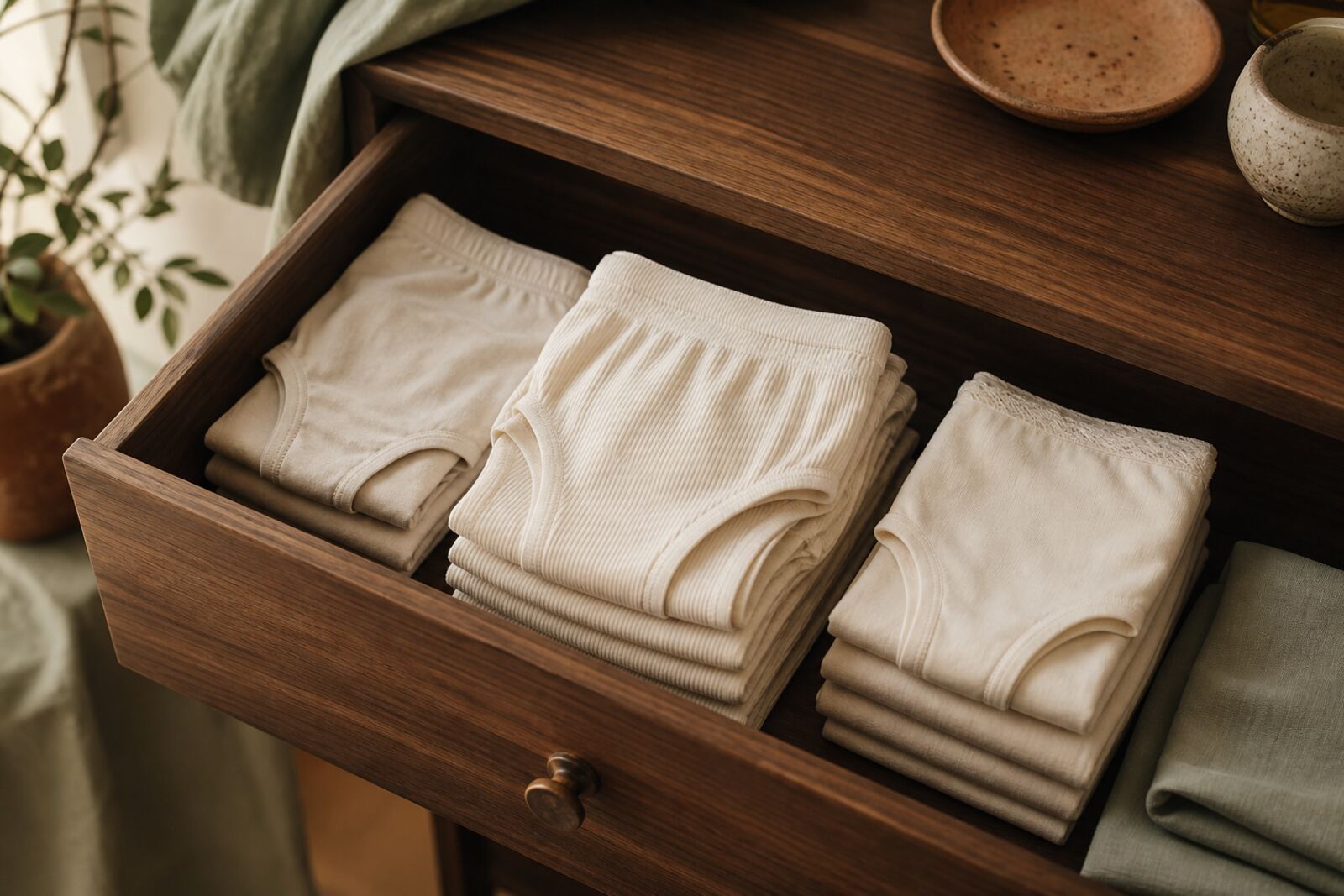
Your underwear logs more hours of direct skin contact than anything else you own. Sixteen hours a day, minimum, against some of the thinnest, most absorbent skin on your body, in the warmest and dampest microclimate you produce. Your jeans don't do that. Your organic cotton tote bag definitely doesn't.
So if you've decided organic textiles are worth paying for at all, the order of operations matters. Not the $200 organic denim, which sits over a base layer and gets washed every three weeks. Not the sheets, though those are a solid second place. The drawer to fix first is the one nobody sees.
The category that earned the scrutiny
This isn't hypothetical. The biggest clothing chemical scandal of the past decade happened in underwear. Thinx sold period underwear marketed as organic, sustainable and nontoxic, until testing commissioned by Sierra magazine in 2020 and run by Notre Dame physicist Graham Peaslee found fluorine, the fingerprint element of PFAS "forever chemicals," concentrated in the crotch lining. A class action followed. Thinx settled for about $4 million, with final court approval in June 2023, and agreed that PFAS would not be intentionally added to its products going forward. The company admitted no wrongdoing.
Whatever you make of the health claims (detection is not dose, and we'd say the same about anyone's lab results), the episode proved something simpler: even a brand built entirely on a trust-your-underwear story wasn't verifying what was in its own fabric. In a category where the product spends all day against mucous membranes, that's the category where certifications stop being decoration.
Two more boring reasons underwear tops the list. Heat and moisture make skin more permeable and more easily irritated, and underwear lives in both. And irritation complaints cluster where fabric sits tightest and dampest. If a finishing chemical or a loose dye is ever going to bother you, it will bother you here first.
GOTS, and the percentage game it exists to stop
"Organic cotton" printed on a package is a vibe. GOTS certification is a claim somebody audited. The Global Organic Textile Standard tracks fiber from the farm through spinning, dyeing and sewing, and it restricts the processing chemistry along the way, which matters more for underwear than for almost anything else you wear.
Certification also covers the parts you can't see. GOTS restricts the dye and finishing chemistry mills can use, requires wastewater treatment, and adds baseline labor standards, so the label is doing more work than the word "organic" suggests. You're not just buying a fiber. You're buying an audited supply chain.
The detail worth memorizing: GOTS has two label grades. "Organic" requires at least 95 percent certified organic fiber. "Made with organic" requires only 70 percent, and plenty of marketing copy leans hard on that gap. A tag reading "made with organic cotton" can lawfully hang on a garment that's nearly a third something else. Look for the GOTS logo and the grade, not the front-of-pack poetry.
OEKO-TEX answers a different question
The other label you'll see is OEKO-TEX Standard 100, and it gets misread constantly. It says nothing about farming. It means the finished product, elastic and thread and labels included, was tested against limit values for a long list of substances you don't want against your skin. Conventional, non-organic underwear can carry it, and that certification is genuinely reassuring on its own terms.
Which is also our anti-panic note: plain cotton underwear from a major brand is very unlikely to hurt you. Organic is the upgrade pick here, not an emergency rescue. The strongest combination is both labels together, GOTS for the fiber and the supply chain, OEKO-TEX for the thing that actually touches you.
The five percent that isn't cotton
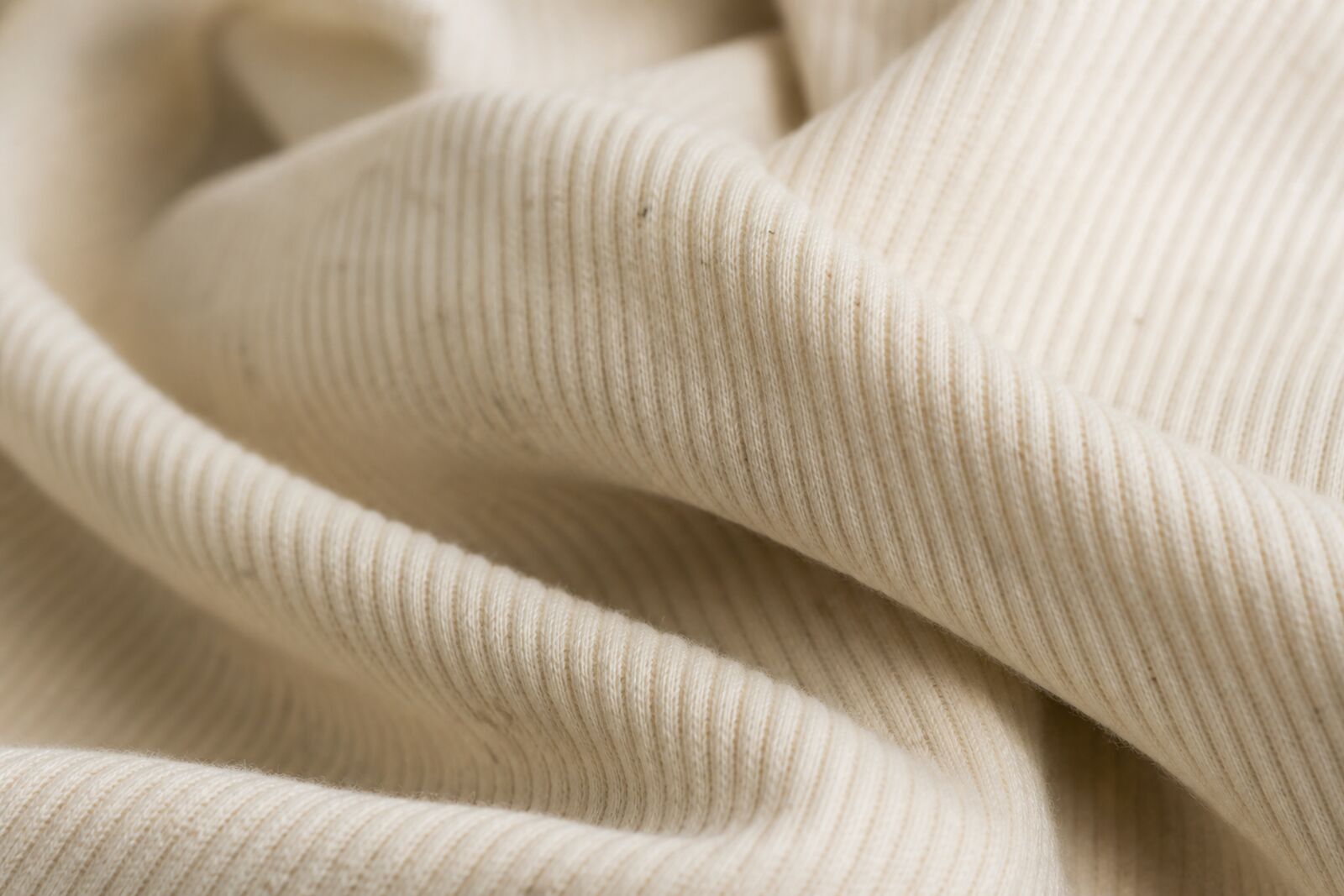
Now the honest concession. Stretch requires synthetics. A 95 percent cotton, 5 percent elastane blend is the realistic optimum for anything fitted: briefs, boxer briefs, trunks, bikinis. One hundred percent cotton underwear exists, mostly in loose, vintage-style boxers, and the fitted versions bag out by early afternoon because cotton fiber has no recovery. Chasing purity here buys you sag, not safety.
The certifiers know it too. GOTS's "organic" grade allows a small share of other material, which is why a properly certified pair can still hold its shape. Take the five percent. It's fine.
Dye is a decision too
The remaining variable is color. The EU restricts azo dyes that can break down into carcinogenic aromatic amines, and certified supply chains screen for them, so dyed underwear from a GOTS or OEKO-TEX maker is not a thing to lose sleep over. But undyed, natural and light-colored pairs simply carry less chemistry to ask questions about, and in this category, simpler is a feature. If you only wear black underwear, buy certified black underwear and move on with your life.
One practical note that applies at every price: run new pairs through the wash before the first wear. Every garment arrives with finishing residues from the mill, and underwear is the last place to skip that step. It costs you nothing but a day.
Where we'd actually spend
NADS makes men's underwear from GOTS-certified organic cotton, with the fitted styles in the standard 95/5 elastane blend and colors from OEKO-TEX certified dyes. It's built around exactly the checklist in this article. The honest caveats: it's a small, menswear-only lineup, and you'll pay boutique prices per pair rather than big-box multipack prices.
Pact is the budget route: GOTS-certified organic cotton basics for men and women, sewn in Fair Trade certified factories, at prices much closer to the mall. The tradeoff is that they're plain, simple cuts and nothing more, which for underwear might be exactly what you want.
Either way, the play is the same. One drawer, certified fiber, a little stretch, boring colors. Done.
Bottom line
Swap the drawer with the most skin in the game first. Buy GOTS-certified pairs with the small elastane share, ideally from a maker that also carries OEKO-TEX Standard 100, and don't pay extra for 100 percent cotton purity you'll regret by noon. Your jeans can stay conventional for years; the fabric that spends sixteen hours a day against you shouldn't.