The short version
- Most air fryer baskets and rice cooker bowls are PTFE-coated aluminum, the same nonstick as the pan you already replaced.
- Intact coating at normal temperatures is a low-stakes situation. Flaking or scratched-to-metal coating means the part is done.
- Air fryers age their coatings faster than pans: hotter cycles, metal tongs, cramped baskets, dishwashers.
- Uncoated options exist, and one is probably already on your counter: the Instant Pot's standard insert is bare stainless.
You did the cookware audit. The scratched nonstick skillet went to the curb, the stainless and cast iron moved in, and you felt reasonably smug about it. Then dinner came out of the air fryer, from a basket coated in the same nonstick you just paid to get rid of, running at 400 degrees, scraped nightly with metal tongs.
Countertop appliances are the blind spot of the nonstick conversation. Here's what's actually in them and which swaps earn their money.
The basket is a nonstick pan with a fan
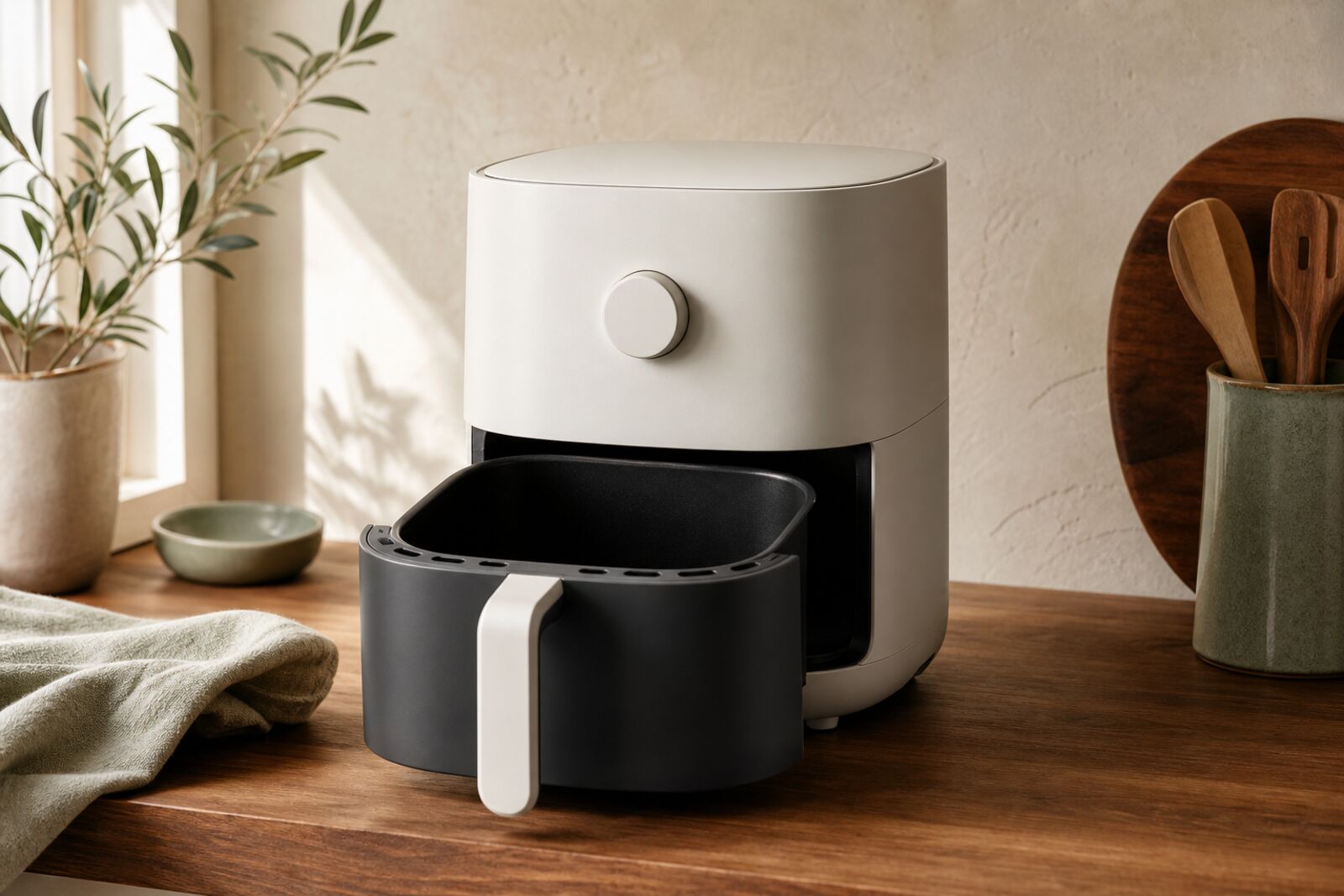
Air fryer baskets, crisper trays, and the removable bowls in most rice cookers and many multicookers are typically aluminum with a PTFE nonstick coating, the same material family as a classic nonstick pan. Some models use ceramic-style (sol-gel) coatings instead. Manufacturers rarely put this on the front of the box; you find it in the spec sheet under "nonstick coated."
The honest chemistry is the same as for pans. PTFE itself is remarkably inert at cooking temperatures; the practical concerns are very high heat, where the coating starts to break down, and physical wear, where the coating flakes into food. The PFOA that gave old nonstick its worst headlines was phased out of US manufacturing years ago. Swallowed flakes of intact PTFE are generally considered to pass through the body inert, which is less gross than it sounds but is also the coating's way of telling you the part is at the end of its service life.
So no, your air fryer is not poisoning you. But the rules you learned for pans, moderate heat, no metal tools, replace when flaking, apply here too, and almost nobody applies them here.
Once you start looking, the coating is everywhere on the counter: waffle irons, panini presses, electric griddles, the pan inside a bread machine. All typically PTFE-coated, all scraped and rarely inspected. You don't need to audit them all tonight. The ones that matter are the ones with hot, direct food contact and visible wear, which in most kitchens means the air fryer basket first, the waffle iron second, and everything else barely at all.
Why an air fryer's coating lives a harder life than a pan's
A pan gets babied. A basket gets excavated. Air fryers run 375 to 450 degrees, cycle after cycle, which is hotter than most stovetop nonstick cooking ever gets (though still below the temperatures where PTFE meaningfully degrades). The basket is a cramped box you dig at with tongs and forks. Perforated crisper plates have coating on hundreds of edges that get knocked around in the sink. Many baskets go through the dishwasher, which manufacturers technically allow and coatings visibly resent.
The result: appliance coatings tend to fail in a couple of years of heavy use, faster than a gently used pan. The inspection is the same one you'd give a skillet. Flaking, bubbling, or patches worn to gray metal mean replace the basket, not necessarily the appliance; most major brands sell replacement baskets and crisper plates for $15 to $40.
Rice cookers and the stainless swap you already own
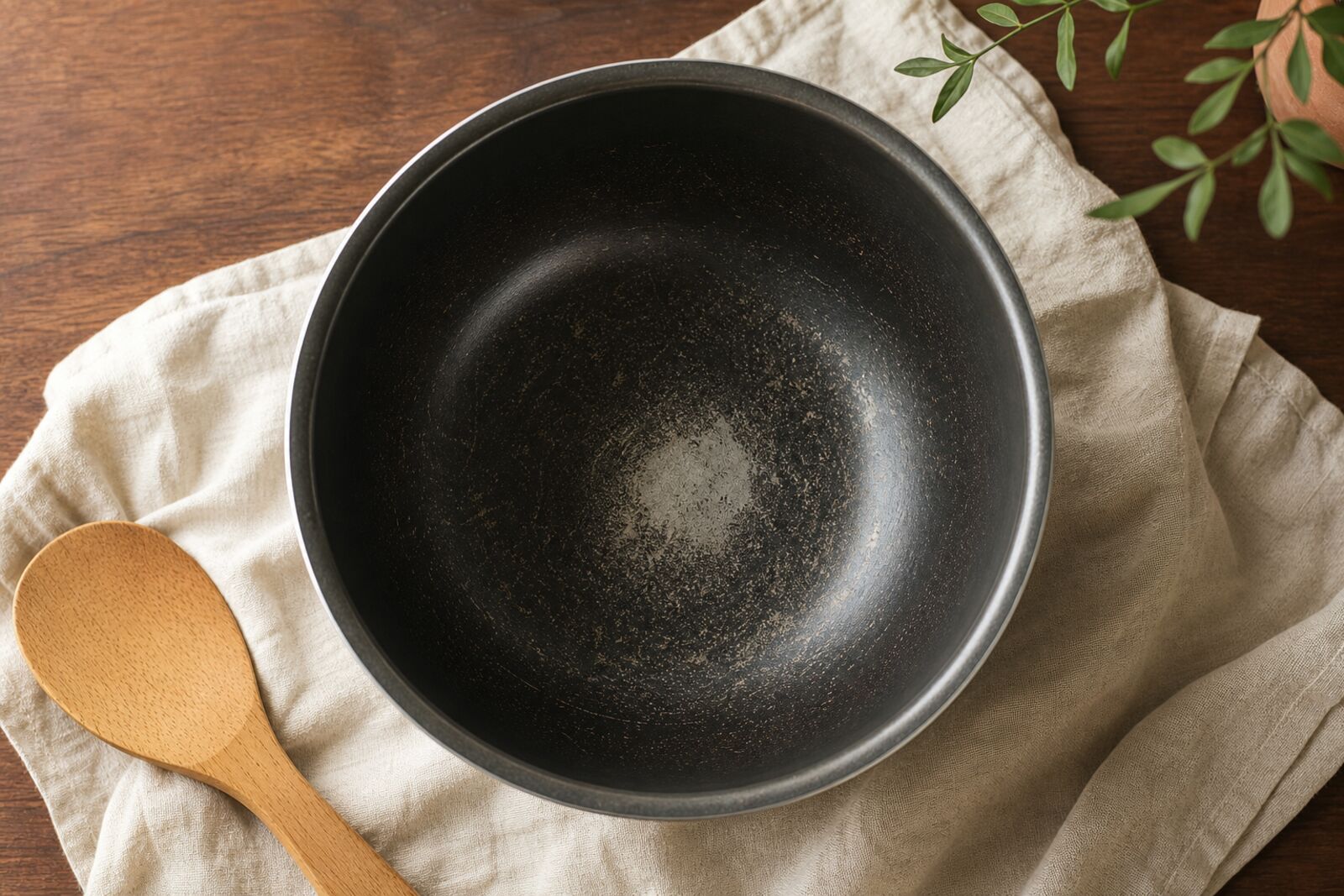
Rice cooker inner pots are the other quiet coating in the kitchen, and rice is a gentle use case: wet, starchy, medium heat, wooden paddle. An intact rice cooker bowl is genuinely low on the worry list.
Still, this is the easiest category to go uncoated. The Instant Pot's standard inner pot is bare 304 stainless steel, no coating at all, and it makes respectable rice; if you own one, you already own an uncoated rice cooker and can stop shopping. Dedicated stainless-pot rice cookers exist too. Buffalo's stainless models are the known quantity, with the honest caveat that rice sticks to bare steel more than to nonstick, so cleanup takes an extra minute of soaking. That's the whole tradeoff.
This is also a fair moment to notice how the marketing runs backwards here. Cookware brands charge a premium for "PFAS-free" pans while appliance brands quietly ship the same old coating in every basket, because nobody was asking. The spec sheet, not the front of the box, is where the answer lives. Look for the words "nonstick coating" under materials, and if a listing won't say what the food-contact surface is made of, assume coated aluminum.
A swap ranking, in order of sanity
Free, do it today: use silicone or wood tools in the basket, stop running coated parts through the dishwasher, and skip max temperature when 375 crisps the food fine.
Cheap, do it when needed: replace a flaking basket or crisper plate. Also cheap: perforated parchment liners for the basket keep food off the worn spots, though they slightly reduce crisping.
Worth it when you're shopping anyway: pick the uncoated version at replacement time. Glass and stainless air fryers are a real category now; Ninja's Crispi, for one, cooks in glass vessels, with the caveat that capacity runs smaller than a family-size basket fryer. For oven-style air fryers, check what the included trays are made of: a stainless interior with PTFE-coated trays is still a PTFE appliance where it counts. And the boring fix deserves top billing: a sheet pan under your oven's convection setting does most of what an air fryer does, on bare metal you already own.
Not worth it: throwing out a working appliance with an intact coating out of vibes. Also not worth a premium: "ceramic coated" versions marketed as the healthy upgrade. They're PTFE-free, which is fine, but like ceramic pans they lose their slickness within a year or two, so you're buying a consumable either way.
Bottom line
Treat every coated basket and bowl like the nonstick pan it is: gentle tools, moderate heat, hand wash, replace on flaking. Keep working appliances with intact coatings and swap to stainless or glass versions when they die, not before. If you own an Instant Pot, your uncoated rice cooker is already on the counter.