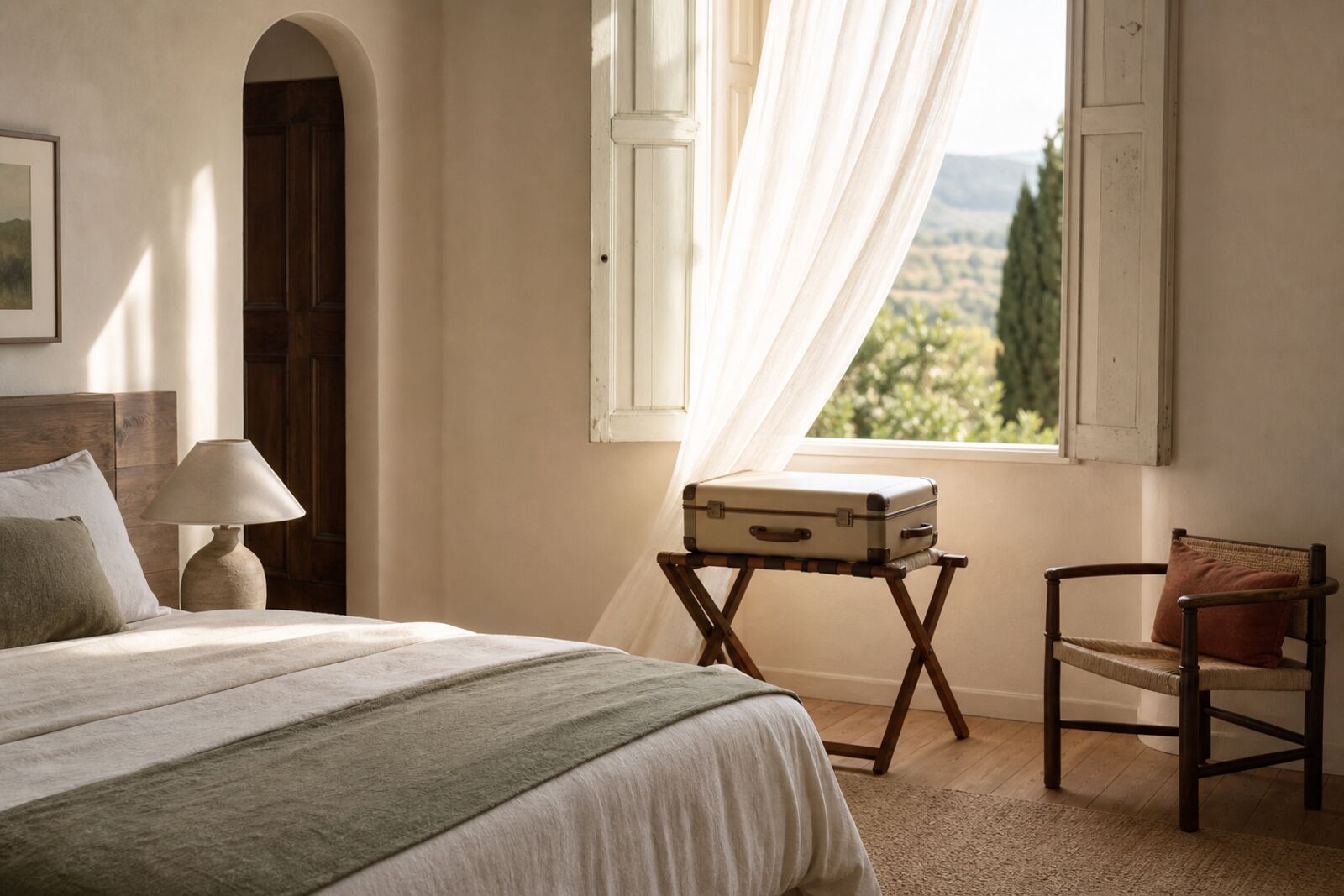
The short version
- The scent in the lobby is deliberate, and the plug-in in your room is the one exposure you can switch off in ten seconds.
- Run the bathroom fan or crack a window on arrival, and run the tap for half a minute if the room has been sitting empty.
- Pack a bar of fragrance-free soap and a filter bottle. That's the whole kit.
- Blackout and a cold room will do more for your health this trip than any chemical audit of the furniture.
That lobby smell is a line item
Westin built its White Tea scent in the early 2000s and pumps it through dry-air diffusers in properties worldwide, on purpose, as brand identity. Most large chains now do some version of this. The smell that greets you is not a coincidence and it is not a cleaning product. It's marketing, delivered as an aerosol, and it usually follows you into the elevator.
In the room, the delivery system is cruder: a plug-in by the outlet, a reed diffuser on the desk, sometimes a sachet in the closet. Anne Steinemann's surveys across the United States, Australia, the UK, and Sweden found that 32.2% of people report health problems from fragranced consumer products, most often headaches and respiratory symptoms. Her lab work on scented products found emissions of more than 100 volatile organic compounds per product, and the ones labeled "green" or "natural" emitted about as many hazardous compounds as the standard versions.
None of which means the plug-in is poisoning you. Most people walk past these things all day and feel nothing. But if you're one of the third who gets a dull headache by hour two in a hotel room and blames the flight, this is the cheapest thing in travel to test: unplug it, put it in a drawer, open a window or run the bathroom exhaust fan for ten minutes. Free, reversible, done before you unpack.
The tap is usually fine, the pipes are the variable
US hotel tap water comes from the same municipal system as everything else in town and is held to the same EPA standards. The variable isn't the city. It's the plumbing between the street and your sink, and specifically how long the water has been sitting in it.
EPA's guidance on buildings after low or no use is blunt about this: stagnant water in premise plumbing can lose its corrosion control and pick up lead and copper, and flushing the fixture first is standard practice. A hotel room that's been vacant for a week is a small version of that problem. Run the cold tap for thirty seconds before you fill anything. It costs nothing and it's the only water advice here with real physics behind it.
The genuine hotel water risk is one almost nobody worries about. CDC's review of Legionnaires' disease outbreaks in North America from 2000 to 2014 found hotels and resorts were the most common travel-associated setting, with potable water (showerheads, sinks) the leading source. It's still a rare disease, and it mostly harms people over 50, smokers, and the immunocompromised. If that's you, run the shower hot for a minute with the door closed and the fan on, then come back and use it. If it isn't you, this is a fact about the world, not an instruction.
For taste, a carbon filter bottle covers it. Brita's filter bottle knocks down chlorine taste and odor and is certified for exactly that, which is worth knowing in both directions: it does nothing about bacteria or protozoa, and it isn't meant to. Domestically that's enough. Internationally it isn't, and that's a different bottle.
What actually touches you for eight hours
Hotel amenities are formulated to smell like the brand, not to be inoffensive. If fragrance is your issue, the bathroom is where you'll get the biggest dose of it, on wet skin, in a small steamy room.
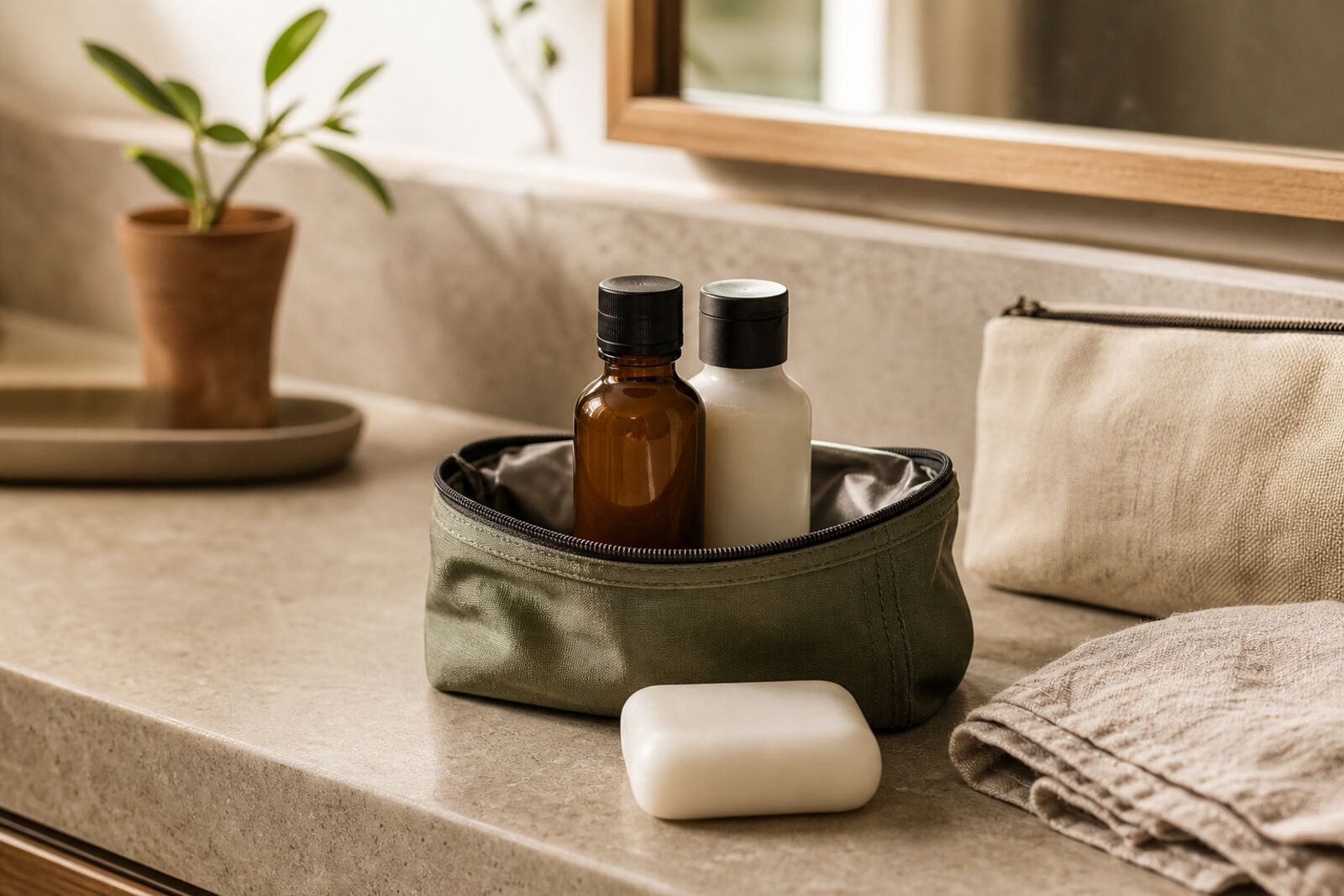
A bar of fragrance-free soap solves this and weighs nothing. Vanicream's Cleansing Bar is the boring, dermatologist-shelf answer: no fragrance, no dyes, no botanical extracts or essential oils, and it carries the National Eczema Association's seal. It's also a plain white bar that produces an unglamorous lather, so if you like your shower to be an experience, you'll hate it. Bring a travel size of your own shampoo while you're at it, since bar shampoo and hotel water hardness are an unpredictable pairing.
One worry you can retire: the dry-cleaned bedspread. Perchloroethylene has been on the way out for years, and EPA's December 2024 final rule under the Toxic Substances Control Act banned consumer uses outright and started a ten-year phaseout of PCE in dry cleaning. Hotel linens are laundered anyway, not dry cleaned. Pull the decorative throw off the bed if you want (it's washed far less often than the sheets), but do it for the hygiene, not the solvent.
The lever that's ten times bigger than the rest
Sleep. Not close.
Most sleep clinicians land on roughly 65 to 68 degrees Fahrenheit for the bedroom, because core body temperature has to fall for sleep to start and a warm room fights that. Hotel rooms default warmer than that and the thermostat is usually the first thing people don't touch. Set it cold on arrival, before dinner, so the room has hours to catch up.
Then handle the light. Hotel curtains almost always leave a bright seam down the middle, and there's a reason travelers use the clip from the trouser hanger to pin them shut. A cheap eye mask does the same job with less improvisation. Kill the standby LEDs, or drape a towel over the TV.
Blackout, cold, quiet. That's the intervention with actual outcome data behind it, and it takes about four minutes to set up.
The things you should stop auditing
You can't do anything about the mattress, the carpet, the HVAC filter, or what housekeeping sprayed on the bathroom counter an hour before you arrived. You can't test the air. You can't ask for the room to be aired out for a day before check-in and expect it to happen.
Trying anyway has a cost, and the cost is paid in sleep and in the general low-grade misery of treating a room like a crime scene. Three small habits, packed once, covers what's genuinely in your control. The rest is somebody else's building.
Bottom line
Unplug the air freshener, flush the tap, and set the thermostat to 65 before you go out for dinner. Pack a fragrance-free bar of soap and a carbon filter bottle and you've covered the exposures a guest can actually change. Everything else in that room is out of your hands, and pretending otherwise costs you the sleep that was the point of the bed.