
The short version
- For decades, a 1975 California flammability rule effectively forced pounds of flame retardant chemicals into most American sofas. A 2013 rewrite, TB 117-2013, removed that requirement.
- Since 2015, California law (SB 1019) requires a label under the cushion stating whether the piece contains added flame retardants. Read it before you buy anything upholstered.
- The older chemicals, PBDEs, were phased out between 2004 and 2013 but linger in old foam and settle into household dust, which is the main way people are exposed.
- New couch: problem mostly solved. Old couch with intact foam: fine. Crumbling pre-2014 foam: replace the cushions.
How one state rule filled every couch with chemicals
Flip up your sofa cushion and look for a white tag. If the couch was made in the last decade, that tag probably says something quietly remarkable: this product contains no added flame retardant chemicals. Getting that sentence onto millions of couches took forty years, and it's one of the few clean wins in the whole non-toxic-home genre.
The story starts in 1975, when California adopted Technical Bulletin 117, a flammability standard requiring the polyurethane foam inside upholstered furniture to survive an open flame for twelve seconds. Foam manufacturers met the test the cheap way: by loading foam with flame retardant chemicals, sometimes a pound or more per sofa. And because no manufacturer wanted to run separate production lines for one giant state, TB 117 became the de facto standard for the entire country. Your couch in Ohio was formulated for Sacramento.
The grim punchline, documented over the following decades: the chemicals migrated out of foam and into house dust and human bodies, and there was thin evidence they made furniture meaningfully safer in real fires, where the fabric cover ignites first and the retardant-laced foam burns anyway, generating more toxic smoke.
The 2013 rewrite that fixed it
In 2013 California revised the standard. The new version, TB 117-2013, replaced the open-flame foam test with a smolder test of the cover fabric, which matches how furniture fires actually start (think cigarette on a cushion, not blowtorch on bare foam). Furniture can pass with smolder-resistant fabrics and barriers. No chemicals required. The rule took effect in January 2014, with compliance mandatory for furniture sold in California from January 2015, and because the California-sets-the-national-default dynamic works in both directions, flame-retardant-free furniture became the American norm within a few years.
Credit where due: chemist and mountaineer Arlene Blum, whose 1970s research helped get a mutagenic flame retardant called tris out of children's pajamas, spent years pushing this rewrite through her Green Science Policy Institute after discovering in the 2000s that the same chemical family was sitting in couches and nursing pillows. Regulatory wins this clean are rare. This one deserves its flowers.
One honest caveat: TB 117-2013 doesn't ban flame retardants. It just stops requiring the conditions that made them necessary, and manufacturers dropped them because they cost money. Which is why the label matters.
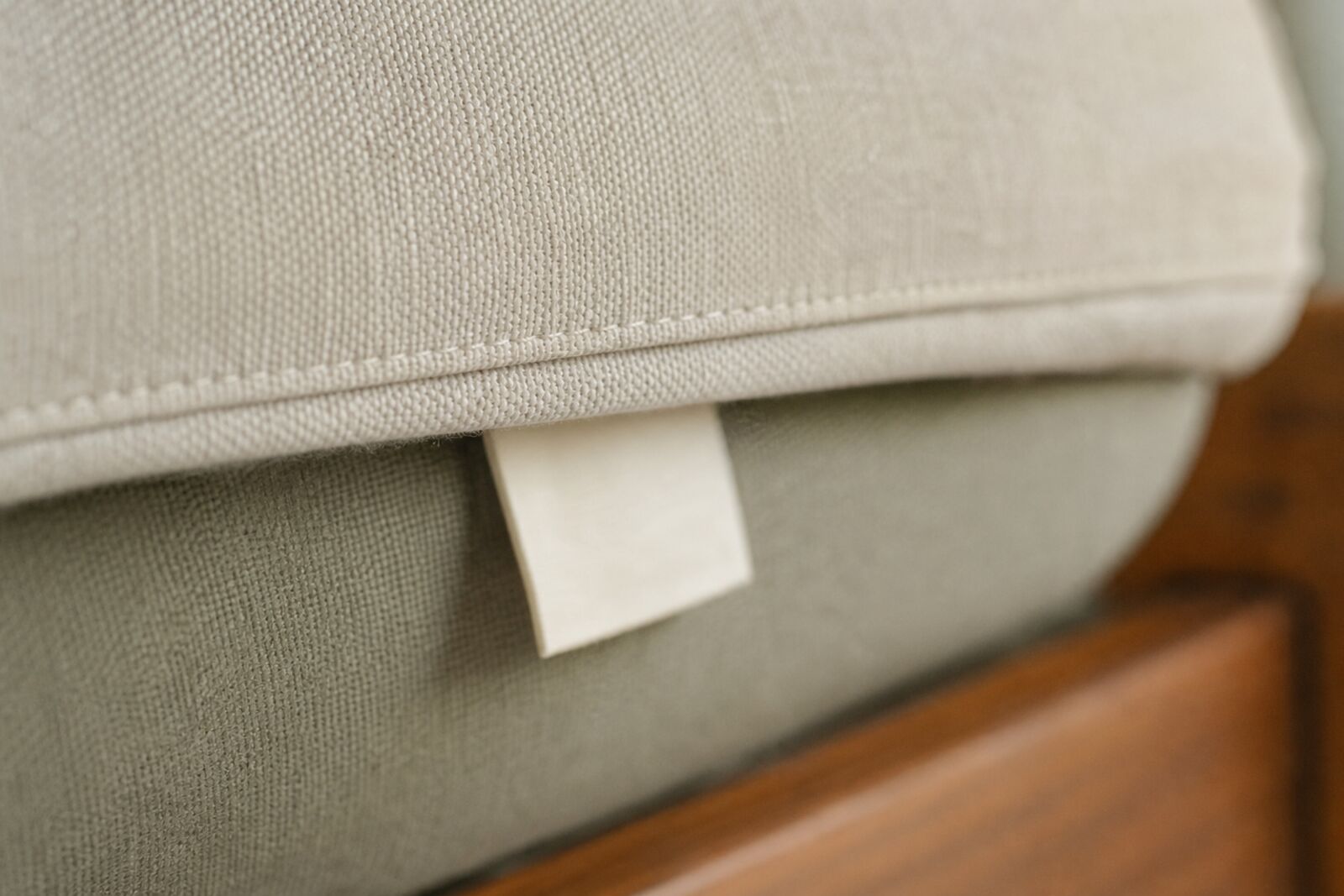
The label to read before you buy
A companion California law, SB 1019, requires upholstered furniture sold there since 2015 to carry a label stating plainly whether the product "contains added flame retardant chemicals" or "contains NO added flame retardant chemicals," with "added" defined as above 1,000 parts per million. Because manufacturers label whole product lines, you'll find this tag on furniture sold nationwide.
So the buying advice is one sentence: look under the cushion for the TB 117-2013 statement and the "NO added flame retardant chemicals" line, and if a floor-model tag or an online listing can't tell you, ask. Most mainstream makers now land on the right side of this by default. The stragglers tend to be imported budget pieces and some recliners, and the label is how you catch them.
Secondhand shoppers get the same tool, plus a date stamp. A used sofa whose tag cites TB 117-2013 and declares no added flame retardants is a fine buy, vintage charm and all. A tag citing the old TB 117 tells you the piece belongs in the treat-it-as-pre-2014 bucket below, which is a maintenance question, not an automatic no.
The old chemicals are still in old foam
The retardants with the worst records, PBDEs (polybrominated diphenyl ethers, linked in studies to thyroid disruption and neurodevelopmental effects), left the market in stages: US production of the penta and octa formulations ended in 2004, and the last, deca, was phased out by the end of 2013. But a phaseout has no recall attached. Furniture bought before roughly 2014 can still hold its original dose, and PBDEs are persistent, in the environment and in people.
The exposure route is unglamorous: dust. The chemicals aren't chemically bonded to foam, so they migrate out, hitch onto household dust, and go from floor to hand to mouth, which is why toddlers, who live on the floor and chew their fingers for a living, carry higher levels than their parents. The encouraging flip side comes from a Green Science Policy Institute-affiliated study of families who swapped old sofas for retardant-free ones: blood PBDE levels dropped by about half within a year and a half. Exposure falls fast when the source leaves.
What to actually do with the couch you own
Don't panic-replace a good sofa; that's fear-marketing logic, and the dust data doesn't support it. A pre-2014 couch with intact foam and intact upholstery is releasing little, and normal housekeeping handles it: vacuum regularly (a HEPA-filter vacuum if you have one), wet-dust hard surfaces instead of dry-flicking dust into the air, wash hands before eating, especially the small hands of the crawling demographic.
The exception is crumbling foam. When old polyurethane foam yellows and starts shedding powder and chunks, through a torn liner or a decades-old cushion, containment is over. That's the couch, chair, or foam mattress topper worth acting on. You often don't need to replace the whole piece: an upholstery shop can re-stuff cushions, and replacement foam cut to size is easy to order. Ask for foam without added flame retardants; post-2014, that's usually what you'll get anyway, but say it out loud when you order. The same dust logic covers the other aging foam in the house, by the way: a disintegrating pre-2014 mattress topper or crumbling carpet padding earns the same replace-it call as a shedding cushion.
Bottom line
Buying new? Check for the TB 117-2013 tag and the "no added flame retardants" line, and this is a solved problem. An old couch with intact foam is fine; keep vacuuming and wet-dusting, since dust is the real exposure route. Crumbling 2008 foam is the one clear action item: replace the cushions, not your peace of mind.