The short version
- CBC Marketplace testing in 2021 found a Shein toddler jacket with about 20 times Canada's lead limit for children's products. Health Canada recalled it.
- Most cheap clothes test fine. The failure rate is low but not zero, which is exactly the argument for washing first.
- Anti-wrinkle finishes can release formaldehyde, and unfixed dye rubs off. Both cause contact dermatitis, and one wash meaningfully cuts your exposure.
- Save your real vigilance for kids' clothes and anything worn against skin all day.
In 2021, CBC's Marketplace bought 38 items from ultra-cheap online retailers including Shein, Zaful and AliExpress and sent them to a University of Toronto lab. About one in five came back with high levels of something unwelcome: lead, phthalates, PFAS. The headline find was a toddler jacket from Shein carrying roughly 20 times the lead Canadian health officials allow in children's products. Health Canada later recalled the jacket, and Shein pulled it and the offending supplier.
Hold onto both halves of that result. One in five is genuinely bad. Four in five is also most of the haul. New clothes aren't a toxic emergency, and they aren't automatically innocent either. They're a lottery with mostly winning tickets, and there's a cheap way to improve your odds: the washing machine. (That applies to the $80 shirt too, by the way. The finishing chemistry is the same idea at every price.)
What's on a brand-new garment, by design
Even a perfectly legal, well-made shirt arrives coated in manufacturing. Wrinkle-resistant and "easy care" finishes are typically resins that can release small amounts of formaldehyde. Excess dye that never bonded to the fiber sits on the surface, waiting to rub off on you (that's what's happening when new dark jeans turn your hands blue). Add softeners, sizing agents that keep fabric crisp through shipping, and whatever the garment picked up in a shipping container.
None of this is a scandal. It's how textiles are made. But formaldehyde-releasing finishes and loose disperse dyes are well-documented causes of allergic contact dermatitis, the itchy rash dermatologists see along waistbands, collars and anywhere fabric rubs. The people who react learn the lesson the hard way. Everyone else can just take the free win: these residues sit on the surface, and a first wash removes a meaningful share of them before they ever meet your skin.
Several countries cap formaldehyde in clothing, with the strictest limits reserved for babies' items, which tells you regulators take the finish seriously without treating it as an emergency. If you've ever noticed that a "non-iron" shirt smells sharper out of the package than a plain one, you've met the resin.
The failure rate is low. It isn't zero.
The CBC results weren't a fluke, and they weren't unique to one retailer. European market-surveillance systems and Health Canada keep flagging ultra-cheap imported clothing, shoes and accessories for the same short list of offenders: restricted azo dyes, phthalates in soft plastic prints and trims, lead and cadmium in zippers, snaps and costume-jewelry hardware. The rates are consistently low, and consistently not zero.
The reason is structural, not moral. At a few dollars a garment, produced in enormous SKU counts by rotating suppliers, per-batch chemical testing is a cost someone decided you wouldn't pay for. Regulators run spot checks, not filters; a recall happens after the product shipped. The system mostly works, and "mostly" is doing quiet work in that sentence.
Two things follow. First, the fear-content version of this story ("everything from these apps is poison") isn't supported by the testing; most sampled items pass. Second, the price of admission for ultra-cheap fashion is that you are the last quality-control step. Zippers and printed plastisol graphics on kids' items are where the ugliest findings cluster, and kids chew on things. That's where we'd actually be picky.
Secondhand, incidentally, quietly sidesteps most of this. A thrifted garment has been through dozens of washes, which means the finishing chemistry is long gone, and it usually costs less than the haul apps. It won't fix lead in a zipper, but for the surface-residue problem, used clothing arrives pre-cleared.

Why the first wash earns its keep
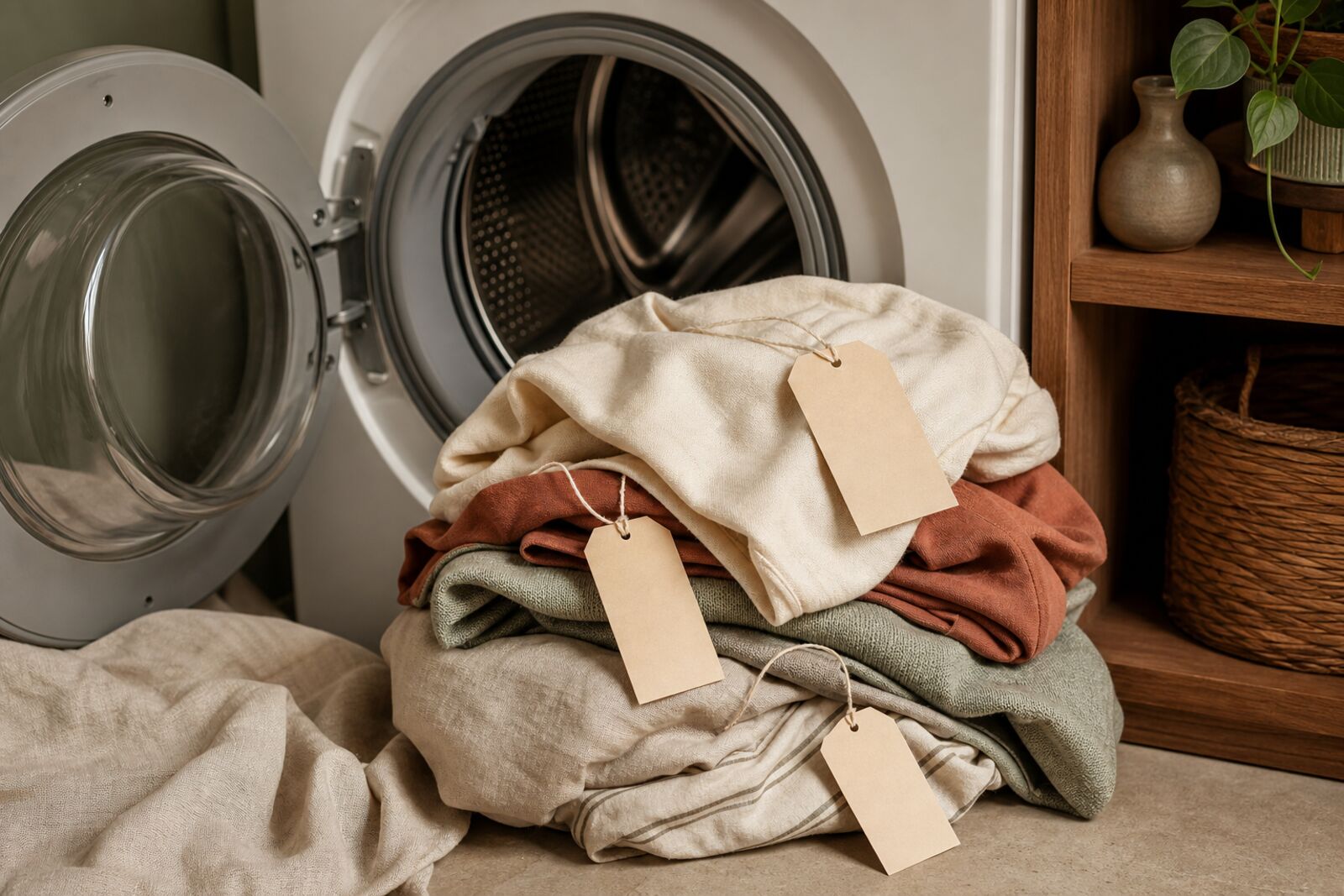
Washing before wearing isn't a superstition. Unfixed dye, finishing residues and surface formaldehyde are exactly the exposures a detergent cycle reduces, and dermatologists have recommended it for textile-dermatitis patients for years. Formaldehyde in finishes also dissipates with washing and airing, which is why that new-clothes smell fades.
Be clear about the limits, though. A wash will not pull lead out of a zipper or phthalates out of a printed graphic; those are in the material, not on it. Washing is the fix for finishing chemistry, which is the common, low-grade exposure. Purchasing choices are the fix for the rare, nasty stuff. Wash cold with regular detergent, and wash kids' clothes before the first wear without exception.
Run that first load separately, or with dark things you don't care about, because unfixed dye is exactly what bleeds. Skip fabric softener; it deposits a film without removing anything. And strong-smelling items benefit from a day airing out on a hanger, since some of what you're smelling leaves on its own.
Brands clean up when someone makes them
The encouraging precedent: supply chains respond to pressure. Greenpeace's Detox campaign, launched in 2011, pushed dozens of major brands to commit to phasing hazardous chemicals out of their manufacturing, and the restricted-substance lists that now govern big-brand production grew directly out of that era. That's worth remembering whenever the problem feels baked in: the chemical load in mainstream clothing dropped because campaigners made specific demands of specific companies and published who complied. An OEKO-TEX Standard 100 label, which certifies the finished product was tested against limits for hundreds of substances, is a decent screen at any price point.
Your washing machine is the personal patch. The structural fix is slower fashion: fewer garments, from brands that publish restricted-substance lists and stick with suppliers long enough to audit them. A $6 top that survives four washes was never really $6.
Bottom line
Wash everything new before it touches your skin; a cold cycle with regular detergent does the job. Be genuinely picky about children's clothes and all-day skin-contact layers from ultra-cheap retailers, where testing keeps finding the worst surprises. And treat slower fashion as the real fix, because the washing machine can't reach what's built into the garment.