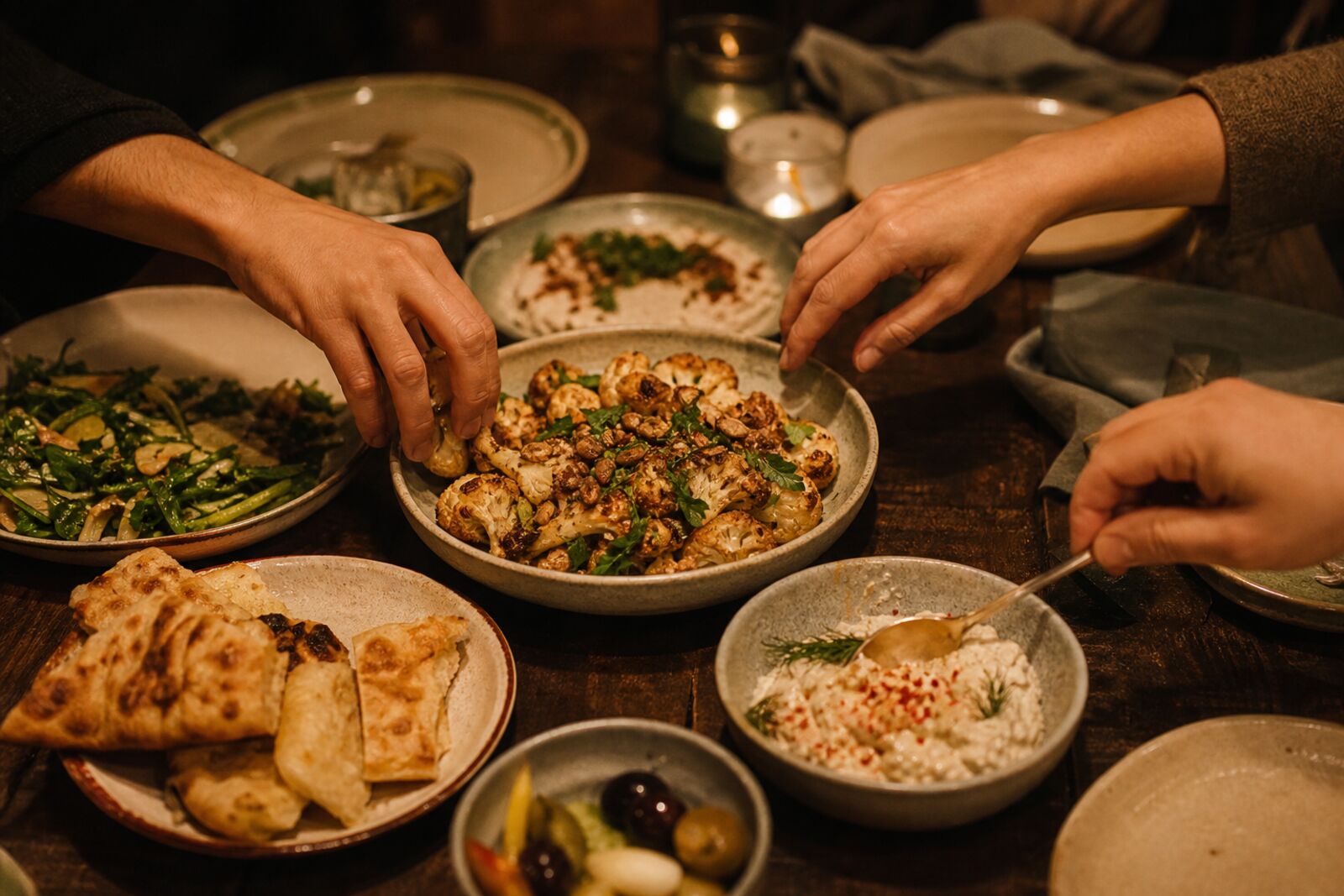
The short version
- The measurable problem with restaurant food is sodium and portion size, not exotic chemistry. A sit-down meal averages more sodium than you're supposed to eat all day.
- The fryer is the one place the chemistry argument holds up, because that oil has been reheated for days.
- Move hot takeout out of the plastic before you microwave it. That's the whole container protocol.
- Eating with people is measurably good for you, and vigilance at the table costs you that.
You are never going to find out
The oil in tonight's fryer was last changed on a schedule nobody at your table knows. Same goes for the pan coating, the sauce that arrived in a bag, and where the chicken came from. You will not find out. The server doesn't know, the line cook is busy, and the answer changes by shift.
This is the part clean-living advice tends to skip, because a guide that admits you have no visibility is a guide with fewer steps to sell. So here's ours, which is short, and which starts with the thing that's actually measured.
The problem is salt and size, and it isn't close
Americans average more than 3,300 mg of sodium a day against a federal recommendation of under 2,300. Restaurant food is where a large slice of that comes from: CDC has put food from restaurants at roughly a quarter of all sodium consumed, and USDA's Economic Research Service finds away-from-home food runs about 1,879 mg of sodium per 1,000 calories versus 1,552 mg for food prepared at home.
Then there's the meal-level number, which is the one that lands. Fast-food meals average around 1,751 mg of sodium, about three quarters of a full day's limit. Meals at full-service restaurants average about 3,312 mg, roughly 144% of the daily limit, in one sitting, before the bread.
Nobody is running an exposé on that, because it isn't a chemical with a scary name. It's just salt, and it's the single most documented health difference between eating out and eating at home. If you eat out twice a week, this is your entire issue.
The fryer is the one chemistry complaint that holds
Restaurant fryer oil isn't fresh oil. It gets reheated across shifts and sometimes across days, and repeated heating drives real degradation: polar compounds, oxidized polymers, and reactive aldehydes accumulate. Researchers sampling oil from working restaurants and fast-food outlets have measured aldehydes at high concentrations, which is why commercial kitchens use test strips to decide when to dump a vat.
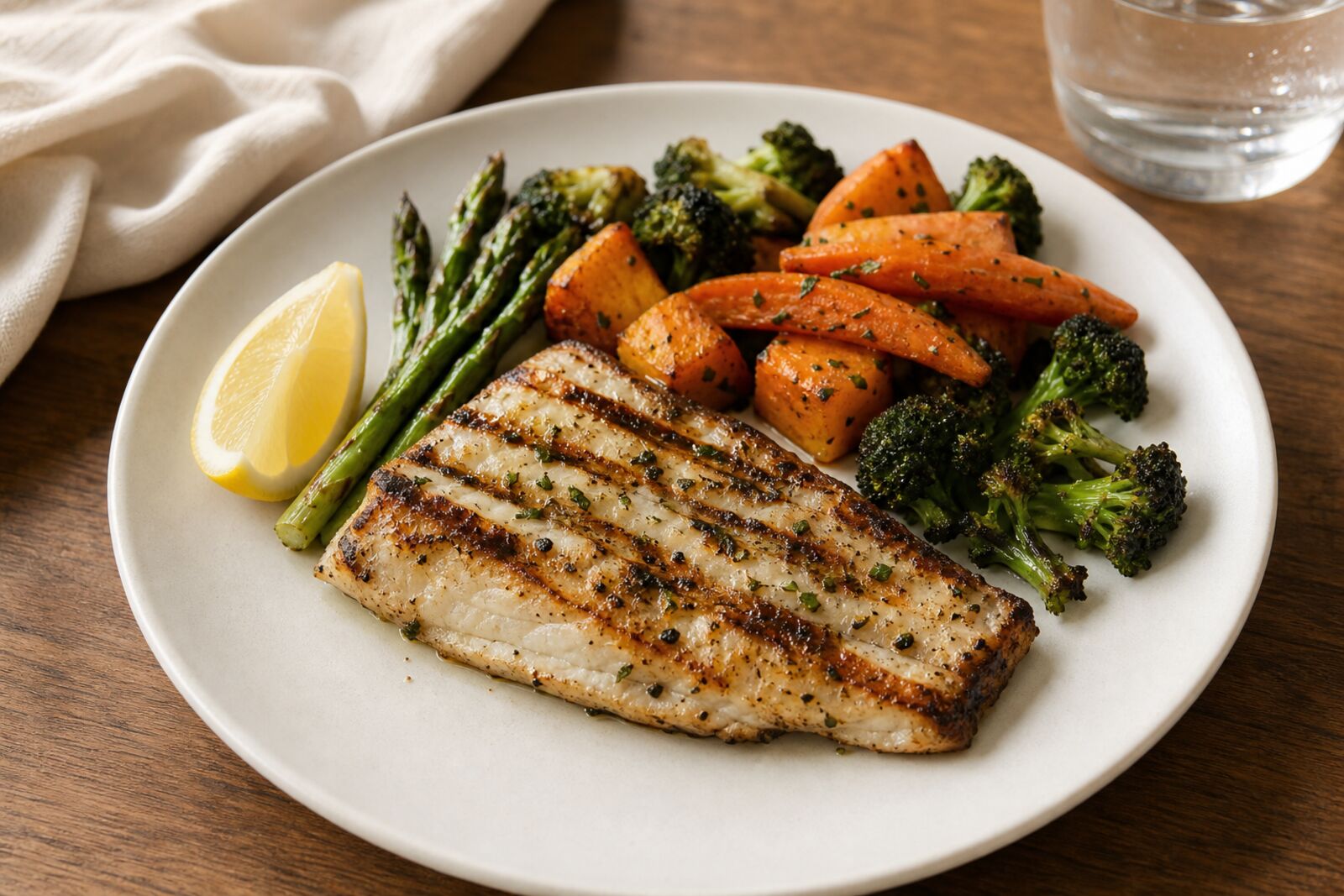
Whether this hurts an occasional customer is unproven, and we're not going to pretend otherwise. But the ordering rule that falls out of it is easy and costs you nothing: grilled, roasted, braised, and steamed over deep-fried, most of the time. That single swap handles the fryer question, a chunk of the calorie question, and usually the sodium question too.
What the fast food phthalate study actually said
In 2021, George Washington University researchers published an analysis in the Journal of Exposure Science and Environmental Epidemiology of 64 food items bought from Burger King, Chipotle, Domino's, McDonald's, Pizza Hut, and Taco Bell. They found the phthalate DnBP in 81% of samples and DEHP in 70%. The replacement plasticizer DEHT showed up in 86%, at much higher concentrations than the older compounds.
Two things are true about that paper. It's real, it's peer reviewed, and it demonstrates that plasticizers migrate from gloves, tubing, and packaging into food along the way. It's also explicitly labeled a preliminary analysis of a small sample, and it did not estimate doses or link those levels to any outcome in a person. Detection is not dose.
The useful read is less dramatic than the headlines were: these compounds track with industrial food handling. Which means the behavior that lowers them is the same behavior that lowers your sodium and your ultra-processed intake. You don't need a separate plan for the phthalates.
The container is worth one habit
Heat plus fat plus plastic is where migration goes up. Studies of microwaving food simulants in plastic containers found phthalate migration rising with heating time and with containers that had been used and reused. Hot, oily takeout in a plastic clamshell is the same conditions.
So: tip it onto a plate. Don't reheat in the container it came in, don't let a soup sit in a cracked, scratched, veteran plastic box, and don't stress about the twenty minutes it spent in the car. That's the entire protocol.
Foam is handling itself. New York's ban on expanded polystyrene foodware took effect in January 2022, New Jersey's in May 2022, and California began restricting foam food containers in January 2025 under SB 54. In a growing share of the country, the worst container is simply no longer offered.
Receipts: an occupational exposure in a consumer costume
Thermal receipt paper is still commonly coated with bisphenols, and handling it does transfer them. The biomonitoring is clear about who that matters for. In one study, cashiers' median urinary BPA was 8.92 µg/L against 3.54 µg/L in controls, and in another, median BPS was 2.53 µg/L in cashiers against 0.67 in controls. The EU has capped BPA in thermal paper at under 0.02% by weight since January 2020.
Read the study design, though: those are people holding hundreds of receipts a shift. You take one, once, at the end of dinner. Declining the receipt is a fine habit and costs nothing. Treating it as a health event is not supported by the numbers, and if you work a register, the meaningful move is gloves and hand washing before you eat, not skipping the paper.
The part of the meal that's good for you
The 2023 Surgeon General's advisory on loneliness put the mortality risk of social disconnection on par with smoking up to 15 cigarettes a day, and linked it to higher rates of heart disease, stroke, dementia, and depression. That is a stronger, better-evidenced effect than anything in this article.
Sitting at a table with people you like is not the compromise in the healthy-living plan. It's one of the interventions. Interrogating the server about seed oils in front of your friends is a way to trade a large documented benefit for a small speculative one, and it's a bad trade every time.
Bottom line
Order the grilled thing, skip the fryer most of the time, and move hot takeout out of the plastic at home. Pick the restaurant for the company and let the sourcing go, because you can't verify it and the social benefit is better documented than the risk. Save your vigilance for your own kitchen, where it actually compounds.