The short version
- Soap and water remove most germs by physically lifting them off surfaces. Most days, that's the whole job.
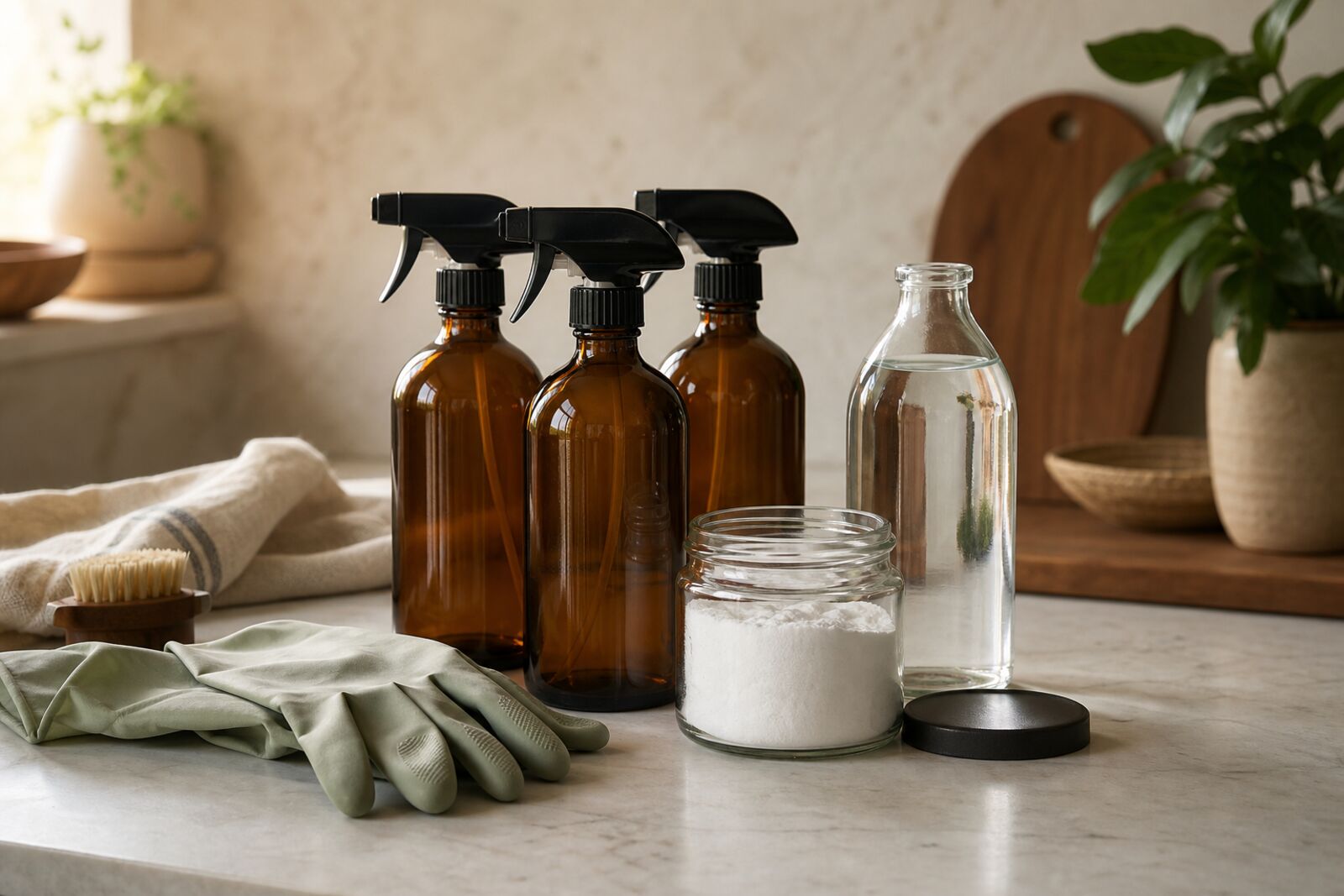
- Vinegar is a good descaler and glass cleaner and a weak disinfectant. Don't trust it with a raw-chicken mess. Baking soda scrubs and deodorizes; mixed together they mostly cancel out.
- Disinfect rarely but properly: an EPA-registered product, left wet for the full contact time on the label.
- EPA Safer Choice is the label that means something. Diluted fragrance-free castile soap does 80% of what the pretty bottles do.
Cleaning and disinfecting are different jobs
Start with the distinction the marketing on both sides blurs. Cleaning means physically removing dirt and microbes from a surface; soap, water, and friction do this astonishingly well, which is why the CDC's guidance for homes leads with plain cleaning and saves disinfection for special cases. Disinfecting means killing what's left, with chemistry, and it only works on an already-clean surface.
Most household messes need the first job. The wellness aisle sells you the second job daily, and the pantry-hack internet tells you vinegar can do it. Both pitches are wrong in their own way.
What the pantry actually wins
Plain white vinegar, about 5% acetic acid, is a legitimately good descaler. Mineral crust on a kettle, cloudy hard-water film on glass, chalky faucet spots: acid dissolves them, and vinegar is the cheapest acid in the store. Streak-free windows and mirrors, coffee-maker descaling, showerhead soaks, all real. Keep it off natural stone counters and unsealed grout, which acid etches.
What vinegar is not: a disinfectant you should count on. It kills some bacteria at some concentrations with enough contact time, but it's slow and inconsistent, it does little against norovirus, and it holds no EPA registration as a disinfectant, which means nobody has had to prove kill claims to a regulator. It's also mediocre on grease, where alkaline cleaners and plain dish soap run circles around it.
Baking soda earns its shelf space as a gentle abrasive and a deodorizer. It scours pots and sinks without scratching, and it genuinely absorbs some odors. It is not, on its own, a serious cleaner of anything greasy or germy.
And the famous volcano? Mixing baking soda and vinegar is an acid-base reaction that mostly produces carbon dioxide, water, and sodium acetate, which is to say fizzy salt water. Chemists have been pointing this out for years. Each ingredient neutralizes the thing that made the other useful. The fizz can nudge loose gunk in a drain, but a kettle of hot water and a $10 drain snake will outperform it every time.
One more pantry-adjacent upgrade that outperforms most sprays: microfiber cloths. The split fibers physically grab and hold soil and microbes with plain water, which is why microfiber shows up in hospital cleaning protocols. A ten-pack costs about as much as one boutique spray and survives hundreds of washes. Just keep fabric softener away from them; it coats the fibers and ruins the grab.
| The job | Use this | Skip this |
|---|---|---|
| Glass, mirrors, hard-water film | Diluted vinegar, microfiber cloth | A dedicated $8 "glass" spray |
| Kettle and coffee-maker scale | Vinegar or citric acid soak | Branded descaling packets (marked-up citric acid) |
| Greasy stovetop | Dish soap or an all-purpose spray | Vinegar (weak on grease) |
| Counter after raw chicken | Soap and water, then an EPA-registered disinfectant, full contact time | Vinegar, essential-oil sprays |
| Slow drain | Hot water, plunger, drain snake, enzyme cleaner | The baking soda volcano |
When you should actually disinfect
Raw poultry juice on the counter, a stomach bug in the house, a cutting board that touched something questionable: these are chemistry moments. Use a product with an EPA registration number, and if you're dealing with a virus, the agency's List N is the searchable database of products with verified claims. Then do the step everyone skips: leave the surface visibly wet for the full contact time on the label, often several minutes. A spray-and-immediate-wipe is a ritual, not a kill.
The flip side: daily disinfecting of every surface is its own mistake. Many disinfectant wipes and sprays rely on quaternary ammonium compounds, and occupational health research links routine quat exposure to asthma and skin sensitization in cleaning and healthcare workers. Your kitchen counter does not need what a hospital room needs. Disinfect rarely, properly, and with the window open.
Two mixing rules, because pantry chemistry has real failure modes. Never combine bleach with vinegar or any other acid; that releases chlorine gas. Never combine bleach with ammonia, which makes chloramine fumes. And don't store hydrogen peroxide and vinegar in one bottle, where they form corrosive peracetic acid. One product at a time, rinse between, window open.
Auditing the pretty bottles
The green-cleaning brands are not scams, and they're not miracles. The label worth trusting is EPA Safer Choice, a real certification with an ingredient review behind it, unlike "natural," "plant-based," and "non-toxic," which legally mean nothing. Look for the logo on the back of the bottle; plenty of mainstream supermarket products carry it, not just the boutique brands.
Branch Basics sells one fragrance-free concentrate you dilute into everything, and the formula is genuinely mild; the starter kit costs more than a year of dish soap, and the refills are where the economics finally make sense. Blueland's tablet system meaningfully cuts plastic and shipping weight, though you're still paying a premium per bottle over anything you dilute yourself, and its cleaning power is ordinary. Mint Cleaning, a small Canadian brand started by two moms on Vancouver Island after one of them had lung damage she attributes to years of cleaning professionally with conventional products, makes a pleasant plant-based line; it's real soap at boutique prices, and "natural" is doing some marketing work there too.
The honest benchmark for all of them: a squirt of fragrance-free castile soap, like Dr. Bronner's unscented, diluted in a spray bottle, covers about 80% of household cleaning for pennies. The refill systems buy you convenience, better-looking bottles, and less plastic guilt. Those are fine things to pay for. Just know that's what you're paying for.
Bottom line
Run the house on diluted castile or a Safer Choice all-purpose spray, keep vinegar for scale and glass and baking soda for scrubbing, and save real disinfectant for raw meat and sick weeks, used with the full contact time. Skip the daily wipe-down of everything; it's exposure without benefit. The $12 systems are pleasant, not necessary, and the pantry is capable, not magic.