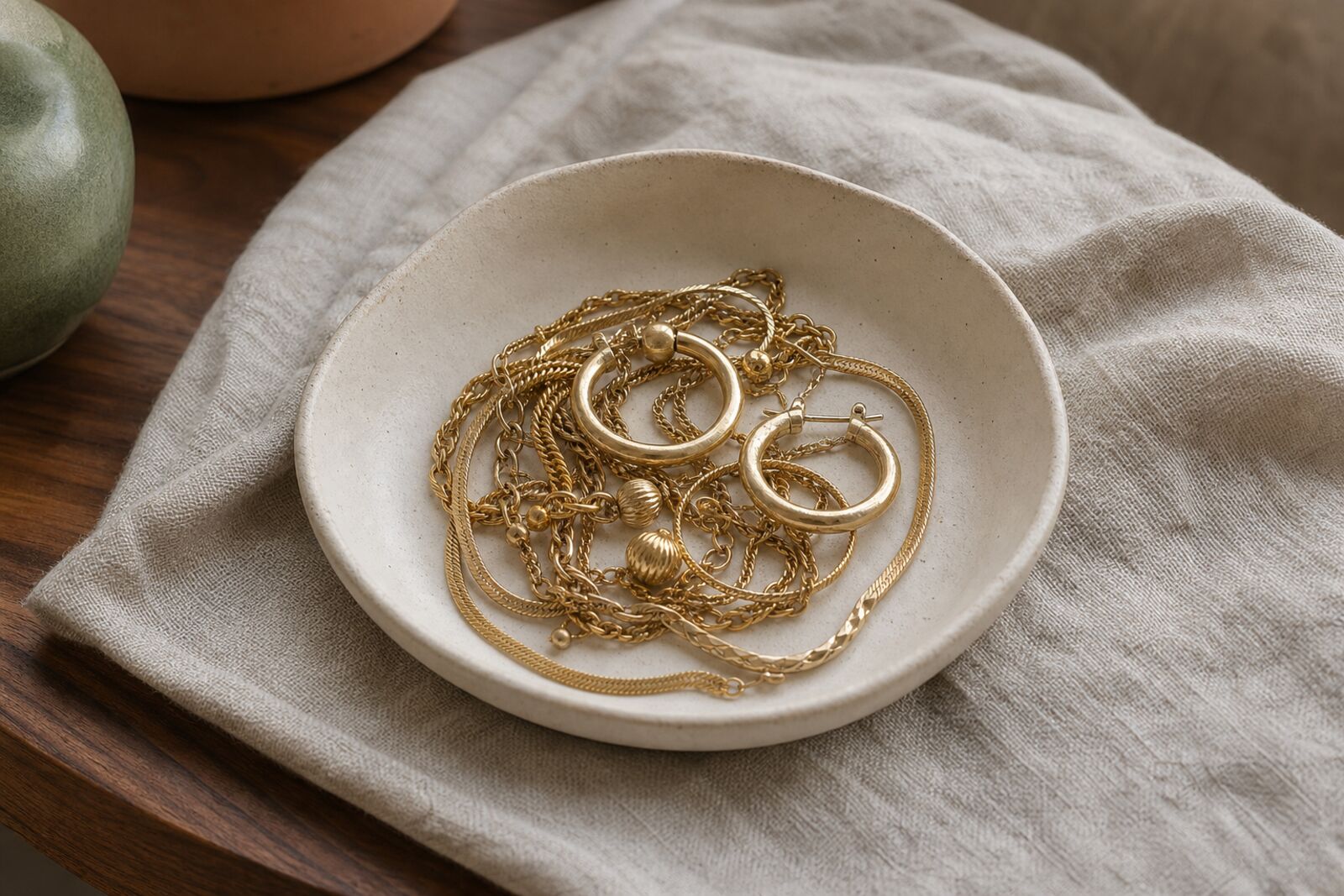
The short version
- Lab testing since 2010 keeps finding cheap jewelry that isn't contaminated with cadmium so much as made of it, up to 90-plus percent by weight.
- The danger route is swallowing and mouthing, which makes this overwhelmingly a small-kid problem, not an adult one.
- The two-second rule: kids get jewelry made and tested for kids, or none. Adults treat cheap unbranded metal as costume-only.
- For piercings and everyday wear, spend the extra $15 on sterling silver, surgical steel, or titanium and stop thinking about it.
The most contaminated piece of children's jewelry in a 2010 Associated Press lab investigation measured 91 percent cadmium by weight. Not tainted with a trace of a heavy metal. Made of one, more or less, with a shiny coat on top.
What the tests keep finding
That AP investigation bought 103 pieces of children's jewelry, mostly imported from China, and had them analyzed. Twelve came back at 10 percent cadmium or more, with several pieces in the 80s and 90s. The story set off congressional letters, recalls, and a wave of state legislation.
Eight years later the problem had migrated to the grown-up racks. In 2018, testing commissioned by the Center for Environmental Health found 31 adult fashion jewelry items at national discount retailers, Ross and Nordstrom Rack among them, containing 40 to 100 percent cadmium. The group used California's Proposition 65 machinery to push retailers into legally binding agreements capping cadmium in what they sell.
Two different decades, same finding: at the very cheap end of the jewelry business, cadmium keeps turning up not as a contaminant but as the actual metal.
How cadmium got into the charm bracelet
The backstory begins with lead, and with a death. In 2006, a four-year-old in Minneapolis died of lead poisoning after swallowing a heart-shaped charm that came free with a pair of Reebok sneakers. About 300,000 of the bracelets were recalled, and the case became the emblem of a wider lead-in-toys panic.
Congress answered in 2008 with the Consumer Product Safety Improvement Act, which slashed how much lead children's products could contain. Then came the unintended consequence: some overseas manufacturers needed a replacement metal that was heavy, shiny, cheap, and easy to cast at low temperatures. Cadmium checked every box, and at the time, almost nobody was testing for it.
Cadmium earned its reputation honestly. It accumulates in kidneys over decades, weakens bone, and is classified as a human carcinogen based on occupational exposure. Nobody wants a child eating it. The question, as always, is how it would get from the trinket into the kid.
The route matters more than the metal
Here's the piece the scary headlines tend to blur: cadmium in a zinc-alloy charm mostly stays put while the charm sits on a wrist. The exposure that moves the needle is ingestion. A swallowed charm bathing in stomach acid for hours can release a genuinely dangerous dose, and researchers testing AP-era pieces found that mouthing and swallowing scenarios could exceed recommended exposure limits by enormous margins. Small kids mouth things. That's the pathway. That's the emergency.
For adults, the math is very different. Skin transfer from an intact plated piece worn for an evening is trivial. The adult versions worth avoiding are the slow ones: a corroding, flaking piece worn against sweaty skin every day, or cheap mystery metal sitting inside a healing piercing. Even then, the most likely consequence isn't cadmium poisoning, it's contact dermatitis from nickel, the far more common cheap-jewelry offender and one of the most widespread contact allergens going.
Detectable is not dangerous. Swallowed is.
One practical signal: when a favorite cheap piece starts flaking, pitting, or turning your finger green, that's its retirement notice. The green itself is just harmless copper salts reacting with sweat, but a failing coating was the only barrier between the mystery alloy underneath and your skin. Toss it.
The patchwork of rules half-fixing it
The 2010 reporting did move shelves. Major chains pulled flagged items while the cameras were on, and a string of children's jewelry recalls followed. What it didn't produce is a clean national rule.
Federal law caps lead in children's products, but there's no equivalent broad federal cadmium limit for jewelry. The strongest backstop is California: its Metal-Containing Jewelry Law has capped cadmium in children's jewelry at 0.03 percent (300 parts per million) since 2012, and a 2019 update signed by Governor Newsom tightened lead and cadmium limits further, giving the state the strictest jewelry standards in the country. Because no one builds a separate supply chain for one state, California's rules quietly protect everyone shopping at national chains.
The gap in the fence is direct-from-overseas shopping apps, where individual parcels skip the retailer testing and Prop 65 agreements entirely. Spot tests of ultra-cheap marketplace jewelry, by regulators and journalists both, keep turning up the same metals the 2010 investigation found. A $2 ring that ships from a warehouse abroad answers to almost nobody.
The two-second rule
For kids: children's jewelry that's sold as children's jewelry, from a retailer with a US supply chain that has to answer for it, or no jewelry at all. Nothing from the adult costume bin, nothing from a vending machine, nothing from a shopping-app haul. And if a child swallows any jewelry, that's an emergency room visit regardless of what it's made of.
For adults: if a piece is metal-heavy, dirt-cheap, and unbranded, treat it as costume-only. Wear it to the party, take it off after, don't sleep in it, don't put it in a fresh piercing, and don't let it end up in a toddler's dress-up box, which is how adult costume jewelry becomes children's jewelry without anyone deciding it should.
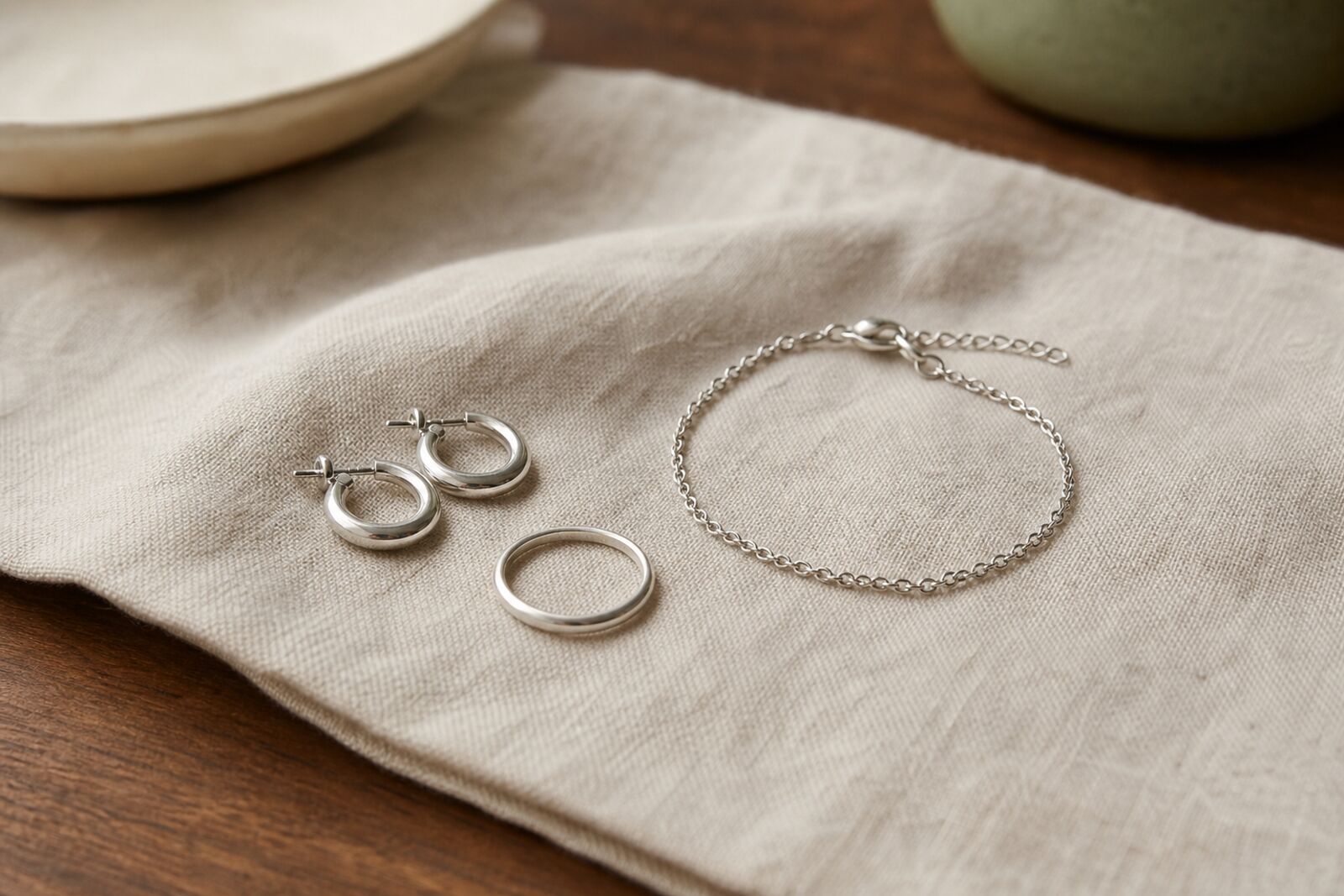
For anything living in your ears or on your hands daily: sterling silver, surgical steel, or titanium. Titanium is the hypoallergenic pick if nickel bothers you, since surgical steel still contains some. None of this costs much. A basic pair of titanium studs runs about the price of two fast-fashion hauls and outlasts fifty of them.
Bottom line
An adult wearing a fast-fashion ring to dinner now and then is fine, and anyone who tells you otherwise is selling fear. A toddler chewing that same ring is the actual emergency the testing keeps warning about. Buy kids only jewelry made and tested for kids, keep costume metal out of piercings and small mouths, and put real metal in anything you wear daily.