The short version
- A Lodge skillet runs under $30 and outlives you. Nothing in the "non-toxic cookware" aisle beats that on either price or lifespan.
- Seasoning isn't a coating sprayed on at a factory. It's oil chemically bonded into a hard film, and it rebuilds itself every time you cook.
- Cast iron does put iron in your food, which is a small bonus for most people and a genuine reason to avoid it if you have hemochromatosis.
- The real downsides are weight, acid, and the learning curve. The maintenance folklore, including the soap rule, is mostly wrong.
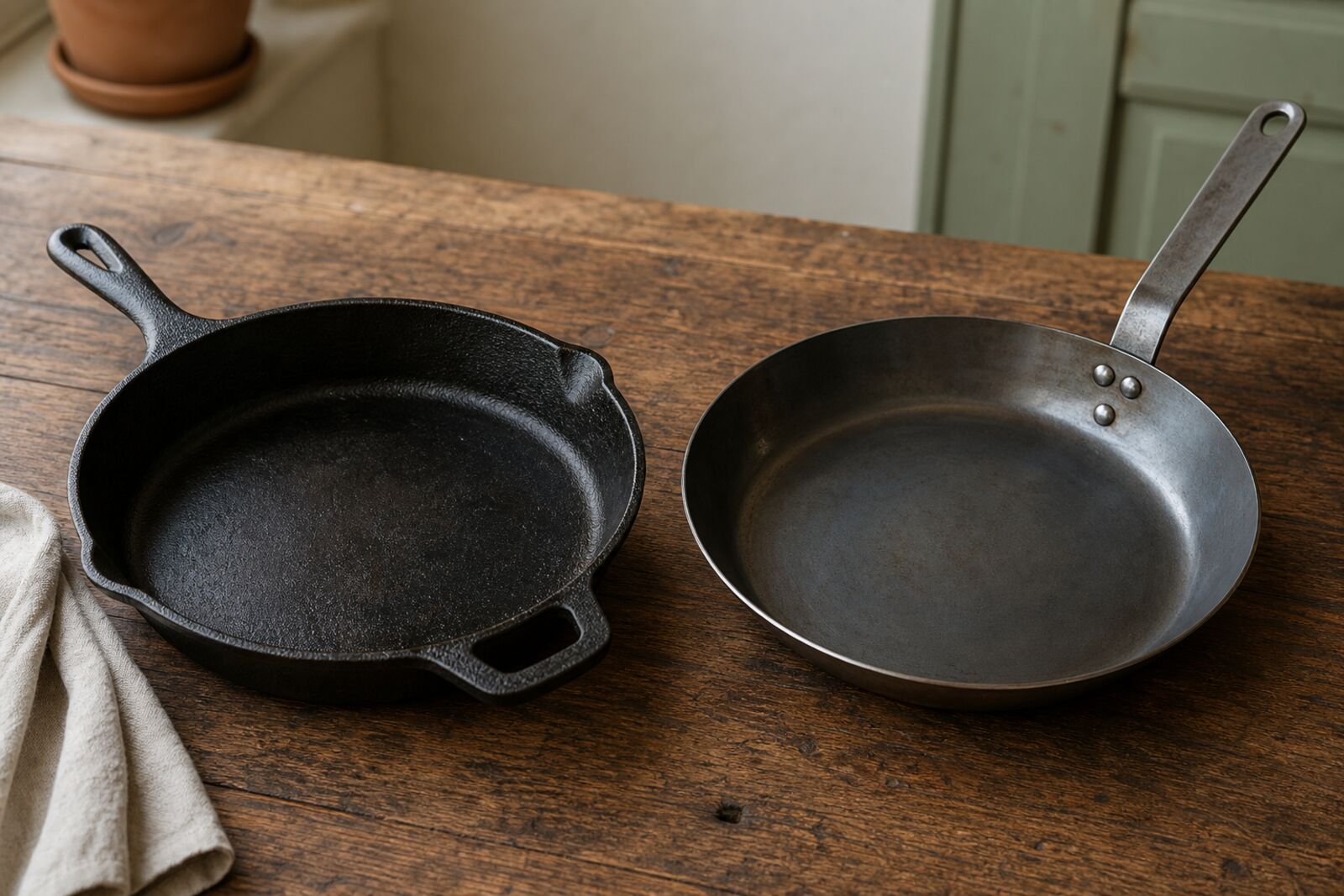
A Lodge 10.25 inch skillet sells for about $29 at Walmart. It contains no coating to scratch, no fluoropolymer to overheat, no proprietary sol-gel formula, and no marketing term that had to be invented in the last decade. It will be usable in eighty years. The pans it competes with in the non-toxic cookware aisle cost four or five times as much and will be sticky by 2028.
That's the whole case, and it's a strong one. It's also not the complete picture, because bare iron asks something of you that a coated pan doesn't.
Seasoning is a chemical reaction, not a coating
The black surface on a well-used iron pan is polymerized oil. Heat a thin layer of fat past its smoke point and the fat molecules break apart, link up, and cross-bond into a hard, plasticky film that's chemically bonded to the metal. It's the same class of reaction that turns linseed oil into a finish on a wooden floor.
Which means seasoning is renewable in a way that no manufactured coating is. Every time you cook something fatty at reasonable heat, you add a little. Scrub some off and you rebuild it. Ruin it entirely and you can strip the pan to bare metal and start over, which is a repair option that does not exist for any nonstick pan ever made.
You'll find strong opinions about which oil to use. In 2010, Sheryl Canter made the case for flaxseed oil on chemical grounds: it's a drying oil, the only edible one, so it polymerizes into a harder film than other fats. Cook's Illustrated tested it and got an impressively durable surface. The catch, reported endlessly by people who tried it since, is that a flaxseed layer tends to be brittle and flake off in sheets. Grapeseed, canola, or plain vegetable oil build slower and hold up better in a real kitchen. Use whatever neutral oil is already in your cabinet and cook in the pan a lot. That's the technique.
Honest expectations: it is not a nonstick pan
Enthusiasts oversell this constantly. A seasoned cast iron pan is slick, not Teflon slick. A well-maintained one will release a fried egg if the pan is properly preheated and there's fat in it. It will not release a delicate omelet from a cold start with no butter, and anyone who tells you otherwise has a different definition of "release" than you do.
Where iron actually wins is heat. It holds a huge amount of thermal energy, so a steak hitting the surface doesn't crater the temperature the way it does in a thin pan. Sear, cornbread, roast chicken, anything that wants sustained high heat, and anything that goes from stovetop into a 450 degree oven. That's the job. Buy a cheap nonstick for the omelets and stop trying to make one pan do everything.
The iron it adds is real, and mostly a feature
Cast iron does leach iron into food, and the number goes up sharply with acid and cooking time. A frequently cited study in the Journal of the American Dietetic Association found foods like tomato sauce picked up dramatically more iron when simmered in cast iron than in other cookware. Twenty minutes of simmering an acidic sauce moves far more iron than a two minute sear.
For most people that's neutral to good, and iron deficiency is a lot more common than iron overload, particularly among menstruating women. For people with hereditary hemochromatosis, the calculus reverses. Clinical guidance for managing iron overload is direct about avoiding uncoated iron cookware, especially for acidic foods. If you have hemochromatosis or a doctor has flagged high ferritin, this is the one cookware caution on this site that we'd call a real medical restriction rather than an abundance of caution.
Carbon steel is cast iron that went to culinary school
Same principle, different physics. Carbon steel is rolled or stamped rather than cast, so it's thinner and lighter, with the same bare-metal-plus-seasoning surface. It heats faster, responds faster when you change the burner, and has sloped sides that make flipping possible. It's the pan behind the line in most restaurants, which tells you something about how it performs under abuse.
The trade is thermal mass. A carbon steel pan loses heat faster than cast iron when four cold chicken thighs go in, so you compensate with a hotter start or fewer things in the pan at once. It also warps more readily under a screaming burner, and it stains and discolors in a way that upsets people who wanted a pretty pan.
Pricing sits between the two extremes: figure roughly $40 to $120 for a 10 or 12 inch pan depending on brand and thickness.
The maintenance rules that are wrong
The soap prohibition is the big one, and it's an artifact of history. Old dish soap contained lye, which strips polymerized fat. Modern dish detergent doesn't. Lodge's own care instructions say to use a little soap if you want. A quick wash with a sponge, a drop of soap, and hot water will not undo months of seasoning.
What genuinely does damage a pan, in order of how much it matters:
- The dishwasher. Detergent plus a long hot soak plus a wet finish equals rust. Never.
- Soaking in the sink. Same reason. Wash it, dry it, put it away.
- Long acidic simmers. A tomato sauce that reduces for an hour will strip seasoning, and the sauce can pick up a metallic edge. Use stainless or enameled cast iron for that.
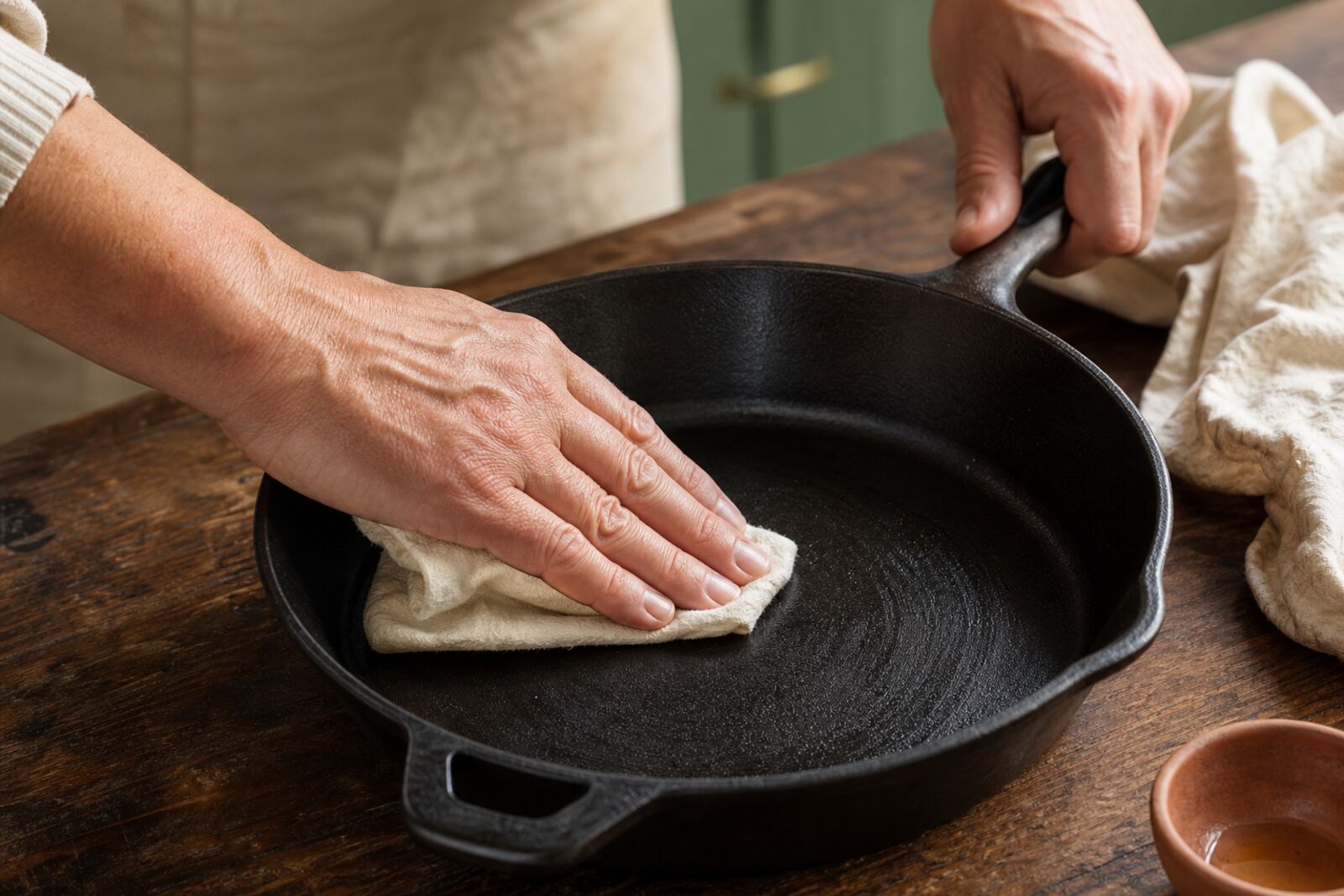
- Storing it wet. Dry it on a warm burner for a minute, wipe a few drops of oil around the surface, done.
Rust, if it happens, is not a death sentence. Scour it off with steel wool, rinse, dry, oil, bake. The pan is metal. It can take it.
What to buy, and what you're paying for
Lodge is the correct default. It's inexpensive, made in Tennessee, and pre-seasoned well enough to cook on the day it arrives. The honest flaw is the surface: modern Lodge castings are pebbly rather than machined smooth, which means it takes longer to build a genuinely slick surface than a vintage Griswold or Wagner would.
Field Company and Smithey both machine their pans smooth and make them lighter, and the difference in surface is real, not imaginary. You're paying several times the Lodge price for it, and the performance gap is smaller than the price gap. Buy one if you want a nice object, not because your eggs demand it.
In carbon steel, Matfer Bourgeat's black steel pans are the restaurant standard, and effectively indestructible. Two caveats worth knowing before it arrives: the factory ships them with a protective coating you have to scrub off before the first seasoning, and the riveted steel handle gets blisteringly hot on the stovetop. Keep a towel nearby.
Bottom line
Buy a Lodge skillet for under $30 and a carbon steel pan when you want something lighter, and you have solved the safe cookware problem for the rest of your life. Skip cast iron entirely if you have hemochromatosis, and keep a stainless pan around for long tomato simmers. Everything else you've heard about maintaining these pans, including the soap rule, is folklore you can ignore.