The short version
- The paraffin-vs-soy health gap is much smaller than candle marketing says. Wick quality, drafts, and burn habits matter more than the wax.
- Any scented candle emits fragrance compounds, and "fragrance" on a label is an undisclosed mixture.
- Plug-ins and reed diffusers emit around the clock. An occasional candle is a smaller dose than a 24/7 device.
- The honest optimum is an unscented beeswax or soy candle and an open window.
A tale of two motivated studies
The $38 "non-toxic" soy candle needs you to believe paraffin is poison. Its favorite citation is real: in 2009, South Carolina State University researchers told an American Chemical Society meeting that burning paraffin candles released toluene and benzene while soy candles didn't. The finding ran everywhere and launched a thousand soy-candle About pages. What the About pages skip is that the work wasn't peer reviewed at the time, and the National Candle Association attacked it as bad science.
The candle industry has its own favorite: a 2007 study from the Okometric lab in Bayreuth, commissioned by candle industry associations, which found that well-made candles of every major wax, paraffin, soy, beeswax, stearin, and palm, burn cleanly, with emissions far below health limits. That one was funded by people who sell paraffin. Both citations deserve the same raised eyebrow.
Where an honest read lands: a well-made candle of either wax, wick trimmed, kept out of drafts, burns relatively cleanly, and sooting is mostly a wick-and-draft problem rather than a wax problem. Soy tends to burn a little slower and cleaner, which makes it a fine preference. A preference is not a health intervention. (The one genuine candle safety scandal, lead-core wicks, ended with a US ban in 2003.)
The actual issue is fragrance in a closed room
An EPA literature review back in 2001 already had the shape of it: candles are a source of indoor particulate matter, and scented candles are more likely to soot than unscented ones. The scent itself is the modern issue. Whatever the wax, a scented candle works by volatilizing fragrance into your air, and "fragrance" or "parfum" on a label is a single word legally covering an undisclosed mixture of ingredients. You can't evaluate what isn't listed. A soy candle loaded with synthetic fragrance oil puts fragrance compounds into the room the same way a paraffin one does.
A note for the "we only use essential oils" crowd: natural fragrance is still fragrance. Essential oils are concentrated volatile compounds by definition, and some of their main ingredients, citrus-scented limonene is the studied example, can react with ozone in indoor air to form new pollutants, including formaldehyde. Natural is a sourcing story, not an emissions rating.
Keep the dose honest in both directions, though. An hour of a scented candle in a ventilated room is a small exposure, and "the lab could detect it" is not "it's hurting you". Every open flame makes fine particles; so does searing a steak, which is why your range hood exists. The math changes with habits: a three-wick burning every evening in a closed bedroom is a different room than a birthday-dinner taper. Fragrance-sensitive people, asthmatics, and migraine-prone readers already know which group they're in. (Incense, for what it's worth, burns far dirtier than candles, and the research linking its smoke to respiratory harm is considerably stronger.)
The 24/7 emitters are the real story
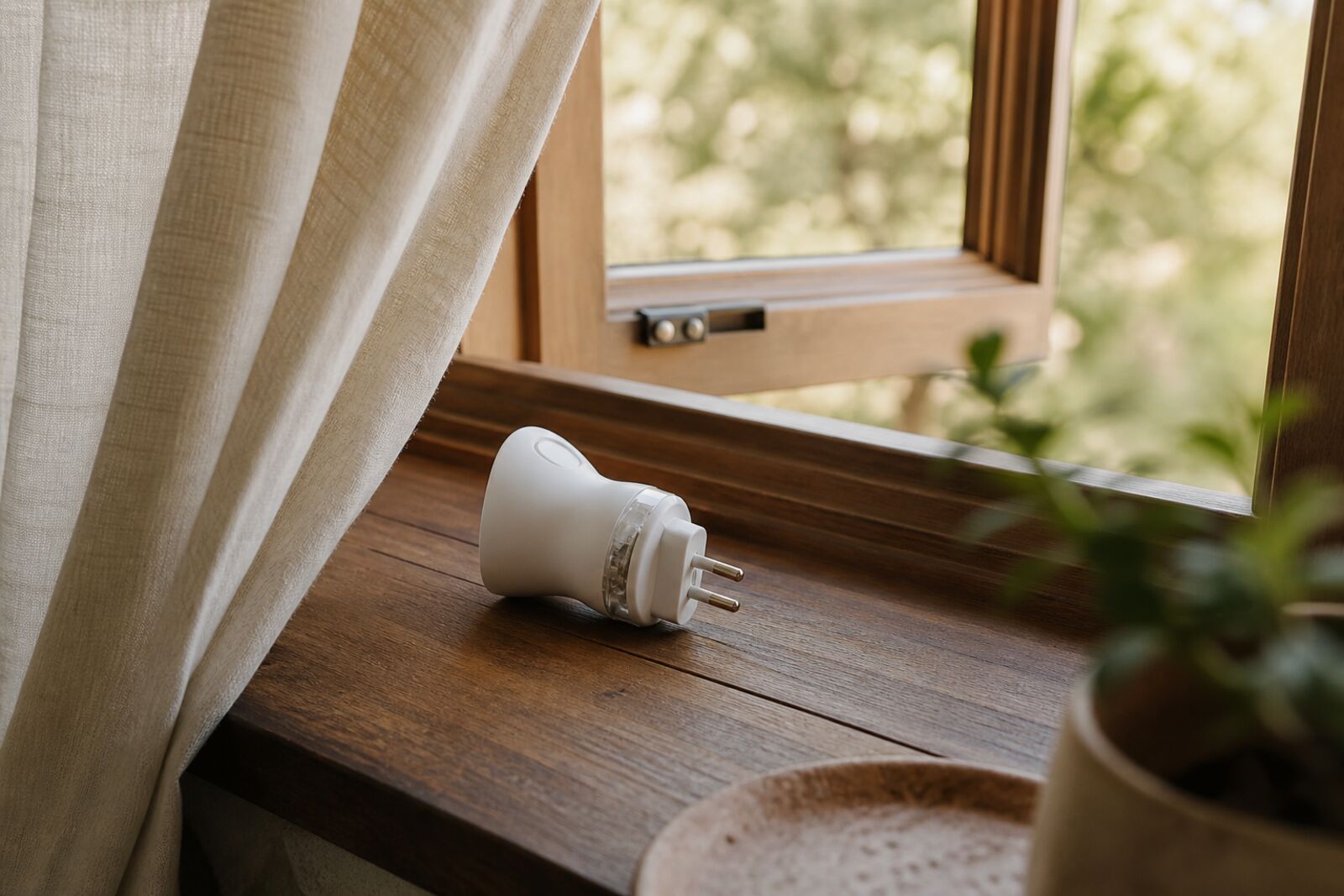
Here's the part the candle panic distracts from. A candle burns for an hour and stops. A plug-in air freshener and a reed diffuser run all day, every day, usually in rooms where the windows stay shut, which is the whole reason someone wanted a freshener. Continuous emission into unventilated air is simply worse arithmetic than occasional emission into ventilated air, and it's striking how much scrutiny candles get while the outlet device hums along unexamined.
Wax melts and other "flameless" warmers get marketed as the clean-air upgrade, and the pitch is half right: no flame means no combustion byproducts, no soot, no particles. But the entire function of the product is continuous fragrance volatilization, so a warmer running all afternoon behaves like a plug-in, not like a candle. The flame was never the main event. The fragrance is.
And no air freshener freshens anything. Every product in the category adds chemicals to the air to layer scent over what's there. If a room reliably smells bad, that's a ventilation or cleaning problem with a cheap solution: open the window, empty the trash, run the fan, find the source. A fragrance deficiency was never the diagnosis.
What we'd actually do
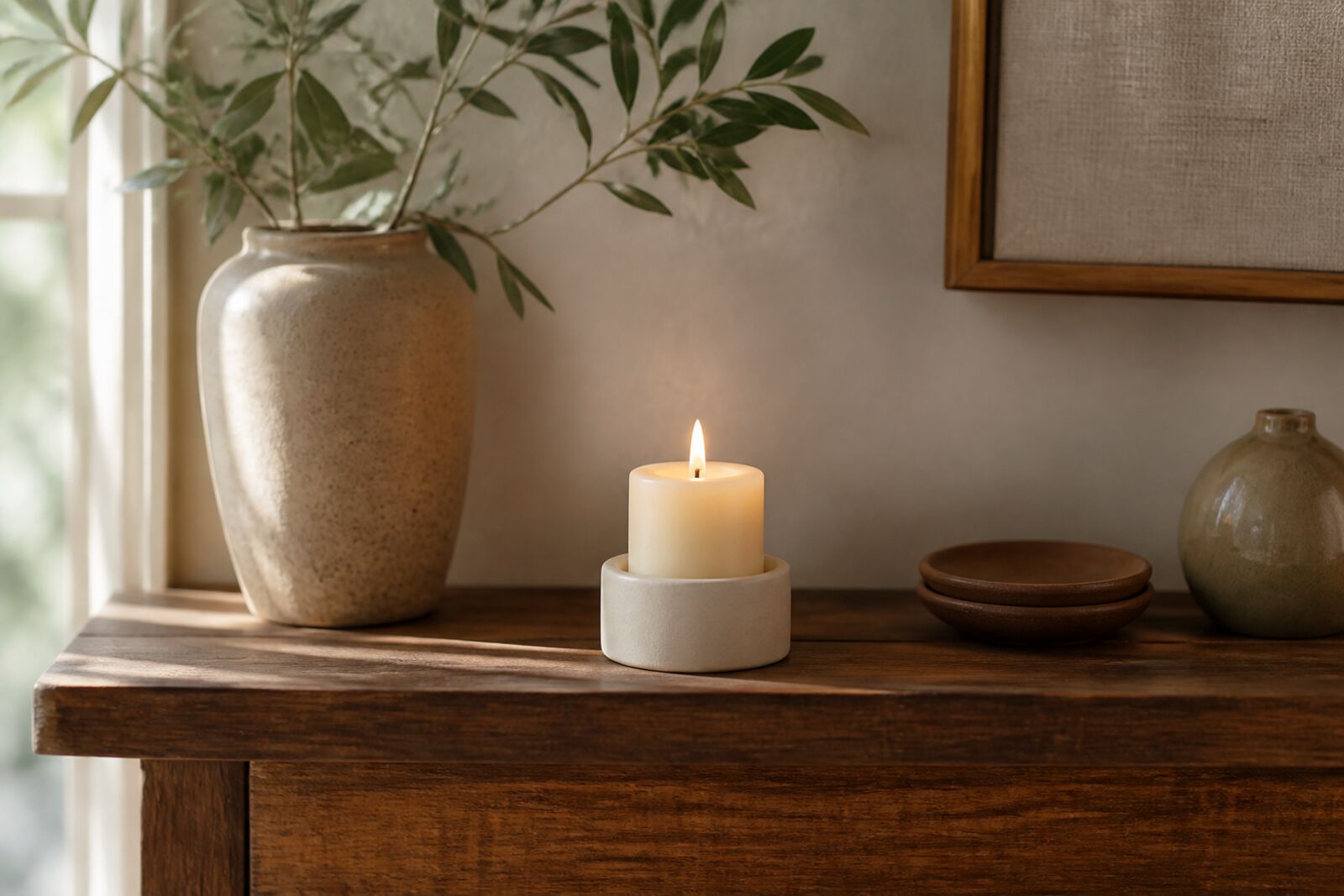
The honest optimum costs almost nothing: an unscented beeswax or soy candle when you want the flame, and an open window, which does more for your air than any wax choice. Trim the wick to a quarter inch, keep the candle out of drafts, and a smoking, mushrooming wick is your cue to trim, not evidence of toxins.
Beeswax earns its following honestly. It burns slowly, smells faintly of honey without any added fragrance, and an unscented pillar from a farmers market or grocery store settles the entire question this article is about. It costs more than paraffin per hour of burn, and that's the whole downside. If you're buying scented anyway, favor makers who name the wax and use cotton or wood wicks, which every reputable US maker now does.
If scented candles are your joy, burn them like a treat: an hour, window cracked, done. On brands, one honest note from the soy aisle: Jackpot Candles sells 100% soy candles with a piece of jewelry hidden inside, which is a fun gift and a fine candle. Buying soy "for your health" over a well-made paraffin candle is a preference, not protection, and the same goes for any soy brand. Nobody needs a $40 non-toxic candle to be safe. The safety equipment is the window.
Bottom line
Burn the candle you love occasionally in a room with airflow and stop worrying about the wax. Skip plug-ins and other always-on fresheners, which are the worst dose in the category. A $40 "non-toxic" candle is a lovely object, not a safety device.