
The short version
- Taper caffeine for a few days first. Withdrawal headache hit 55.5% of coffee drinkers on day one of Ramadan, and it's the one cause of a fasting headache you control.
- Salt matters more than water. Fasting flushes out about 4 g worth of table salt a day whether you eat any or not, and the only life-threatening event in 768 supervised fasting visits was low blood sodium.
- There's no clinical guideline for breaking a 48-hour fast, and refeeding syndrome isn't a real risk at two days. The elaborate refeed protocols online trace back to commercial blogs, not to any guideline.
- Expect fatigue, a bad night's sleep and a light head on standing. Don't plan a long run or a long drive for day two.
Not medical advice
This is a report on what the published research and the people who run fasting protocols actually say. We don't run a clinic, we haven't supervised anyone's fast, and nothing here is medical advice from us. Fasting interacts with real medical conditions and with common prescriptions, and the medication section below is the part to take literally rather than skim. If you take anything for blood sugar, blood pressure, or your heart, talk to the person who prescribes it before you go days without eating.
Two days sits just under the line medicine cares about
Not eating becomes a clinical event at five days. NICE says it in one sentence, quoted in a 2008 BMJ paper: "Any patient with negligible food intake for more than five days is at risk." ASPEN draws the same line.
Two days is not five days. That gap is why 48 hours is a sane first attempt and a five-day fast is a different undertaking. You'll be in ketosis by the end, and you'll learn how you handle hunger.
The week before is where this is won
Two multi-day fasting programs have published cohort data, and they agree on almost nothing except that you taper first. TrueNorth Health Center in California wants two days of raw and steamed fruit and vegetables, with coffee, alcohol, nicotine, grains, dairy, meat, sugar, oil and salt out. Buchinger Wilhelmi in Germany asks one 600 kcal vegetarian day.
Copy the caffeine part. A 2023 Headache paper on 755 caffeine drinkers found withdrawal headache on day one of Ramadan in 55.5%. Not the whole story: Mosek and Korczyn's Yom Kippur study in Neurology found headaches in 39% of fasters against 7% of non-fasters, and concluded caffeine and nicotine withdrawal "did not appear to have an influence." Taper anyway. It's the one cause you own.
Bank sleep going in, because you won't get much during, and keep training easy first. Fasting halves muscle glycogen, and our read is there's no sense starting empty.
Dr. Daniel Pompa, whose protocol most people meet first online, frames prep well: "Fasting is like a marathon: you need to prepare for it." He's a chiropractor by training who works as a health coach and program seller rather than a practicing clinician, with no medical degree. His structure is worth more than his mechanisms.
| TrueNorth (California) | Buchinger Wilhelmi (Germany) | |
|---|---|---|
| Before | At least 2 days of raw and steamed fruit and vegetables only | One 600 kcal vegetarian "relief day" |
| During | Water only, minimum 40 oz (1.2 L) a day | Minimum 2.5 L of water or herbal tea, plus 200 to 500 kcal of juice and soup |
| Activity | Minimized. Slow walking, light stretching, no heavy machinery | Daily adapted aerobic activity, "with caution during the first 3 days" |
| First food | Juice and vegetable broth | A ripe apple, raw or cooked, eaten slowly. Potato soup that evening |
| Refeed length | At least half the length of the fast | Roughly 3 to 4 days, whatever the fast length |
The hour-by-hour story you've read is wrong
The popular version: burn liver glycogen for 24 hours, then flip a switch into fat burning. A 1991 Science paper tracked liver glycogen by NMR across a 68-hour fast. Gluconeogenesis was already 64% of glucose production in the first 22 hours, 82% over the next 14, and 96% after that. No switch. It's gradual, roughly finished when a 48-hour fast ends, with ketones near 2 to 4 mmol/L.
What you'll feel is documented. Across 768 supervised water-only fasting visits at TrueNorth: fatigue 48.2%, insomnia 33.5%, nausea 32.2%, headache 30.1%, presyncope 28.3%. Insomnia at number two surprises people.
The usual explanation for that, an adrenaline surge, is wrong. A 72-hour study found no significant change in total body norepinephrine spillover, epinephrine or energy expenditure. What rose was noradrenaline in fat tissue, a local signal rather than a systemic one. A 48-hour study in women found systolic pressure fell from 158 to 146.
Your head holds up. A 2025 Psychological Bulletin meta-analysis of 222 effect sizes across 3,484 people found "no meaningful difference between fasted and satiated participants." Nine weightlifters fasting 48 hours got faster reaction times; other populations went the other way. Fine, not sharper.
Salt is the thing nobody tells you about
Fasting makes you lose sodium whether you eat any or not. A 1975 Journal of Clinical Investigation study held sodium intake constant in nine fasting women and urinary sodium climbed anyway, tracking ketoacid excretion. Ketoacids leave as negatively charged particles and take sodium with them, about 68 mEq a day at peak, roughly 4 g of table salt going out while none comes in.
The scale moves fast early for the same reason: a 1982 Western Journal of Medicine review put the first week's loss at 0.9 kg a day, "primarily due to negative sodium balance." Those pounds are water.
The clinics differ on water by more than double: TrueNorth 40 ounces a day minimum, Buchinger 2.5 litres. Both have published safety records, so we're not picking a winner. Drink to thirst rather than to a number. The only life-threatening event in TrueNorth's 768 visits was hyponatremia, and Buchinger logged six mild cases in 1,422. Plain water replaces volume without replacing salt, so overdrinking is riskier during a fast than at any other time.
Pompa gets the salt right: "Stay away from lemon, herbal teas, apple cider vinegar... Stick to water and mineral-rich sea salt, that's it," with 2 to 4 g of sea salt a day early on. Drinking to thirst is closer to the clinical picture than forcing litres. His reason isn't: he says extra water works against "detox," which isn't a thing. The real reason is sodium dilution.
Where we part company: the supplements he recommends during a fast, a binder, a detox product and molecular hydrogen, are sold by his own companies, with no clinical evidence behind them. His day-by-day autophagy timeline isn't physiology either: there's no human autophagy clock, as the companion piece covers.
And nobody says this out loud: no published clinical protocol specifies electrolyte doses for a healthy person fasting unsupervised. That guidance doesn't exist. Every milligram figure out there is a judgment call.
Skip the long run, and think about the drive home
Endurance collapses first. Seven trained men cycling to exhaustion managed 144 minutes fed and 89 after a 36-hour fast, a 38% drop. Maximal strength holds up far better; the limiter is halved glycogen, not lost muscle.
TrueNorth minimizes activity and specifies that patients "did not operate heavy machinery." Buchinger prescribes daily aerobic activity "with caution during the first 3 days," and Pompa says back off during extended fasts. Put that heavy machinery line next to presyncope in 28.3% of visits and you have your answer about driving on day two.
Breaking it is the part everyone gets wrong
There's no clinical guideline for breaking a 48-hour fast. NICE, ASPEN, IrSPEN and the WHO all set thresholds at five days or more. The elaborate protocols online, "200 to 300 kcal of low-fat liquid, then 150 to 250 kcal every two hours," appear near-verbatim across commercial health sites, tracing to no guideline, trial or clinic protocol.
Refeeding syndrome, the thing those rituals gesture at, isn't a realistic risk at 48 hours in a healthy person. It's real past five days, which the five-day guide covers. At two days, fearing it is theater.
The real reasons to start small are comfort and blood sugar. Gastric emptying of glucose is slower after a multi-day fast than after an overnight one, and after a 72-hour fast the glucose and insulin response to an ordinary mixed meal was significantly greater. A big meal feels bad, not dangerous.
Your digestive enzymes are not asleep, either. The only human measurement ran 20 days of total fasting and found reductions at day 10, still low-normal, with lipase unchanged. Nothing shows changes at 24 to 48 hours. The human gut is far tougher about disuse than the rodent gut it usually gets described from.
Bone broth needs a correction: it's the internet's default fast-breaker, and neither clinic uses it. Buchinger starts with a ripe apple, raw or cooked, eaten slowly, then potato soup at night; TrueNorth with juice and vegetable broth. The one real paper on it found "large variability in the amino acid content" and concluded "it is unlikely that bone broth can provide a consistently reliable source of key amino acids."
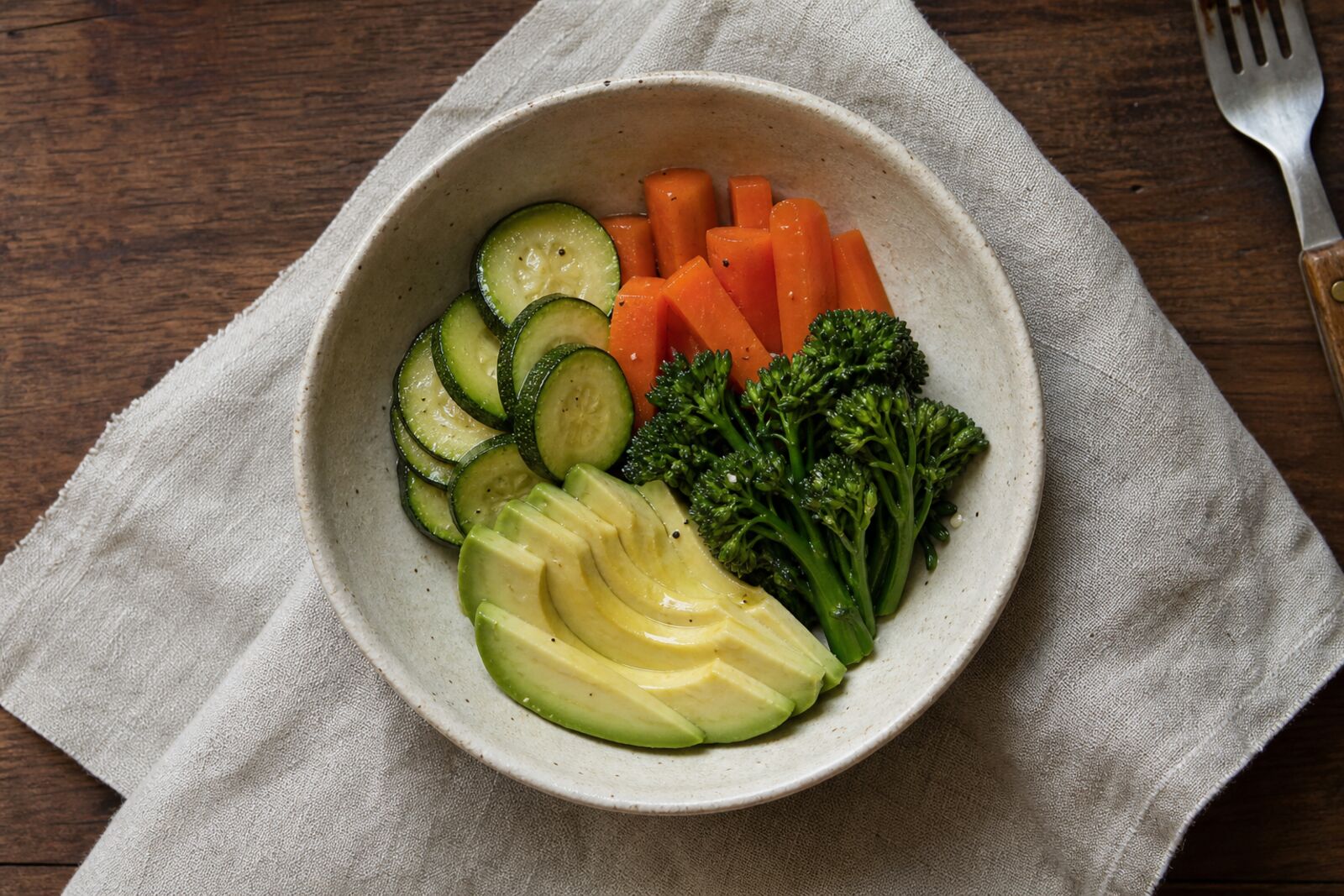
Pompa's first food advice is his best material and matches the clinics: "go slowly by eating very soft, easily digestible foods such as berries, soft avocados, and veggies that are steamed or blended." Our call, labeled as one: something small and soft, wait an hour or two, then a normal meal. Convention plus physiology, not evidence. No trial has ever compared first foods after a fast.
Same for training. Nobody has studied when to resume it, glycogen is the rate limiter, and both clinics reintroduce exercise gradually once people eat solid food. Convention again.
The medication section is not a caveat
The full list is in our evidence piece. Two belong here. Metformin's FDA label says the drug "should be temporarily discontinued while patients have restricted food and fluid intake." SGLT2 inhibitors carry a risk of euglycemic ketoacidosis, ketoacidosis while your meter reads normal, with reduced calorie intake among the triggers.
We're not handing you a stop list. NHS England's Think Kidneys board, which popularized sick-day medication rules, says that "the evidence that provision of such advice reduces net harm is very weak." Take those drug names to whoever prescribes them, before the last meal rather than at hour 30.
Bottom line
Forty-eight hours is the right size for a first long fast: real enough to matter, short enough that the clinical literature doesn't treat it as an event. Taper the caffeine, take a couple of grams of salt, drink when you're thirsty instead of to a number, and leave the driving and the hard training for another day. Then break it with something small and soft, and skip the elaborate protocol, because nobody has ever tested one.